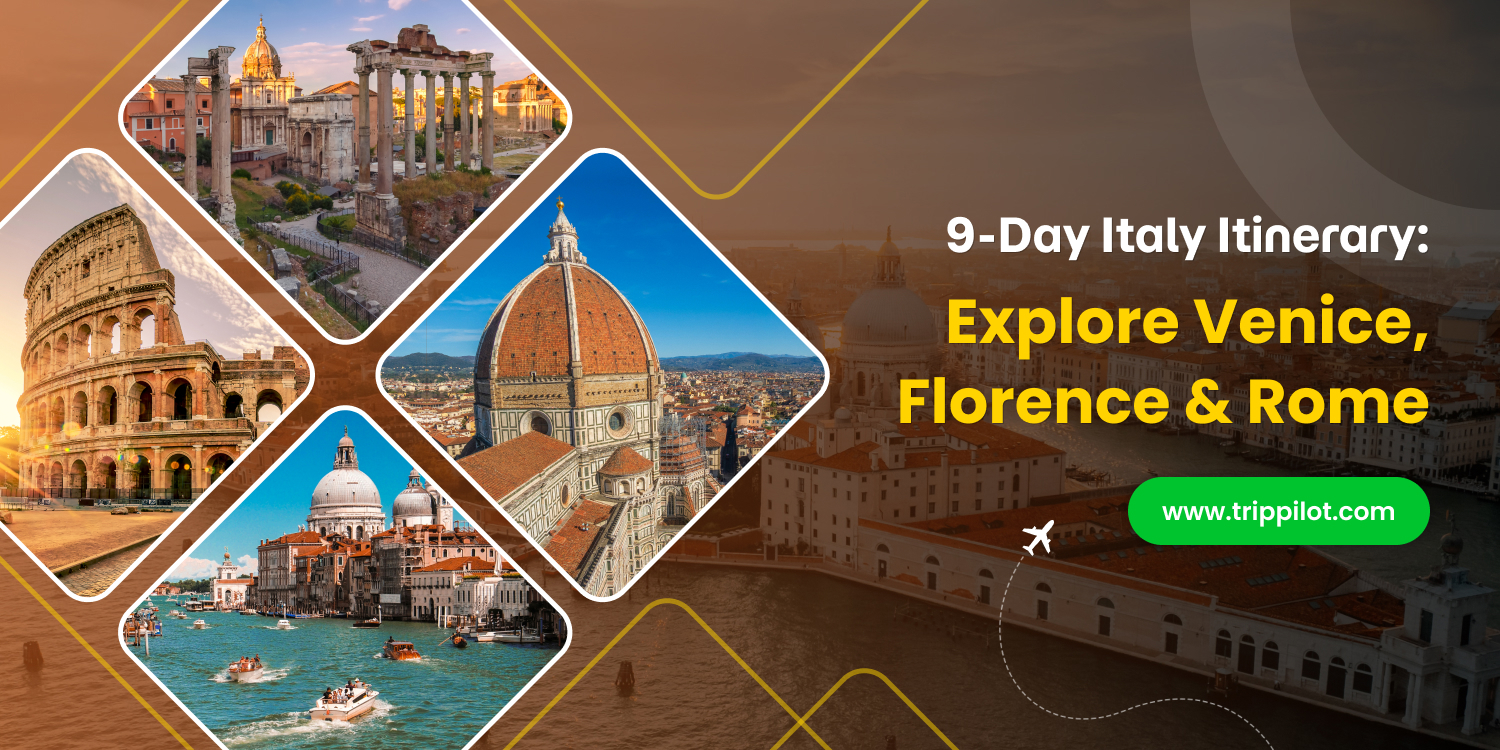
As the vaporetto hummed under the early morning mist in Venice, I sipped a tiny espresso, watching gondolas drift past pastel buildings along the Grand Canal and I realized I had only nine days to soak in three of Italy’s greatest jewels: Venice, Florence, and Rome. It felt ambitious... but with smart planning and a little help from TripPilot, this journey promised to be more than a checklist a living, breathing Italian adventure.
Key Takeaways
- Experience the best of three iconic Italian cities Venice’s canals, Florence’s Renaissance art, and Rome’s ancient history in 9 days without rushing.
- Get insider travel tips: best times to visit, transport advice, local food stops, skip-the-line booking strategies.
- Save time and money by using high-speed trains, multi-day transit passes, and TripPilot’s AI-driven itinerary optimization.
- Balance must-see landmarks with relaxed local experiences: gelato by the Arno, cicchetti in Venice, espresso in Roman piazzas.
- Cultural insights and practical advice on lodging zones, ticket booking, crowd management, and seasonal timing.
- Use TripPilot to tailor the plan to your pace, interests, and travel style flexible, efficient, and personalized
Table of Contents
9-Day Italy Itinerary: Day-by-Day Guide.
- Day 1–2: Venice — Floating Through History and Canals.
- Day 3–4: Florence — Renaissance Art, Cobblestones & Tuscan Flavours.
- Day 5 (Optional Tuscany or Day-trip) — Slow Down & Savor the Countryside.
- Day 6–9: Rome — Ancient Ruins, Baroque Splendor & Modern Vibes.
Cultural Insights, Timing & Practical Travel Tips.
- Best Time to Travel / Avoiding Crowds.
- Navigating By Train & Local Transit
- Local Cuisine & Eating Smart
- Booking & Skip-the-Line Strategy.
- Allow for Spontaneity
9-Day Italy Itinerary: Day-by-Day Guide
Discover the best of Italy in 9 unforgettable days as you journey from Florence to timeless Rome and romantic Venice. This perfectly paced itinerary blends iconic landmarks, rich culture, and authentic local experiences for a seamless Italian adventure.
Day 1–2: Venice — Floating Through History and Canals
Your trip begins in Venice an ethereal labyrinth of canals, bridges, and history. Arrive at Venezia Santa Lucia railway station (or via ferry from the airport), then make your way to your accommodation. Staying in central sestieri like San Marco, San Polo or Dorsoduro helps maximize your time and minimize your commute.
On your first evening, wander by the canals, let the soft water reflections set in Venice at dusk is pure magic. On Day 2, hit the main highlights:
- Visit St. Mark’s Basilica early in the morning to beat the crowds its Byzantine mosaics and gilded interiors glow in the morning light.
- Just next door, explore Doge's Palace (consider "skip-the-line" tickets), the seat of Venetian power for centuries. From there, stroll to the iconic Rialto Bridge and gaze at the traffic of gondolas and vaporetto boats moving on the Grand Canal, flanked by grand palaces dating from the 13th–18th centuries.
- Midday - explore hidden alleys or enjoy a “cicchetti and wine” crawl in a bacari (local Venetian bars), a real taste of daily Venetian life. Evening could mean a quiet gondola ride or simply a leisurely stroll as the city lights reflect on the water.
Consider a 48- or 72-hour vaporetto pass if you plan to explore inner canals and possibly outer islands, it’s cheaper than singles and much more convenient.
Let the custom travel planner suggest optimal timing (early Basilica visit, late-afternoon boat ride, evening canal walk) to avoid crowds. It can also book skip-the-line tickets to Doge’s Palace and Venice’s top attractions to save you hours.
Day 3–4: Florence — Renaissance Art, Cobblestones & Tuscan Flavours
Leave Venice by train to reach Florence, a city where art, history, and Tuscan charm live around every cobblestone corner. The high-speed train connection is convenient (typically ~2 hours), making the transition smooth.
Once you arrive, settle into lodging close to the historic centre, ideally within a 10–15 minute walk of the iconic dome to make the most of your time.
On Day 3, take it a bit easy after travel: enjoy a relaxed stroll through piazzas, shops, and maybe sample Florence’s culinary delights, fresh pasta, local bread, and gelato. On Day 4, dive into Florence’s artistic heritage:
- Visit the Florence Cathedral (Santa Maria del Fiore) and consider climbing the dome for a panoramic city view.
- Explore Galleria dell'Accademia to see Michelangelo’s David, a must for first-time visitors.
- Head to Uffizi Gallery, one of the world’s greatest art museums, with works spanning centuries. Pre-book tickets to skip long queues.
- Later, wander over to Ponte Vecchio the historic bridge lined with jewelry shops, and enjoythe sunset by the Arno River.
Skip-the-line booking for Florence’s Duomo, Accademia, and Uffizi is almost essential lines get long fast. Also, spend evenings strolling the Arno or relaxing with gelato instead of over-scheduling.
A personal travel itinerary can help you slot in museum visits (with timed-entry), plan the walking route to avoid back-tracking, and suggest nearby local eateries or trattorias for a true Tuscan dining experience.
Day 5 (Optional Tuscany or Day-trip) — Slow Down & Savor the Countryside
If you have flexibility and love countryside vibes, use this day for a short trip into Tuscany’s serene hills or nearby medieval towns (Siena, San Gimignano, maybe even Pisa) a breath of fresh air after city sightseeing. Many 9-day Italy itineraries recommend this detour.
You might enjoy wine tasting, olive groves, relaxing lunches at local trattorias, and maybe a slower pace where time seems to stretch a bit.
AI travel planner can suggest the best day-trip based on your interests (wine & food, medieval towns, slow countryside) and handle the transit planning trains or rental car suggestions included.
Day 6–9: Rome — Ancient Ruins, Baroque Splendor & Modern Vibes
From Florence, a short high-speed train ride lands you in Rome the Eternal City. Explore Rome with 3–4 full days here, you can blend must-see ancient sites with vibrant street life, world-class art, and great food.
On Day 6, check in and absorb the evening atmosphere, perhaps enjoy a casual wine and pasta at a Roman trattoria, then a gelato while wandering near old piazzas.
On Day 7, dive into Rome’s ancient core:
- Explore the Colosseum, Roman Forum and Palatine Hill early. A combined ticket is worth the skip-the-line wait; you’ll walk through millennia of history gladiators, emperors, everyday Romans.
- In the afternoon, visit the Pantheon and stroll via historic streets to Piazza Navona with its lively fountains and artists. Perhaps toss a coin in the Trevi Fountain a fun tradition for first-time visitors.
On Day 8, embrace the spiritual and artistic heritage:
- Spend the morning at the Vatican Museums including the Sistine Chapel then visit St. Peter’s Basilica and climb the dome for an unforgettable view over Rome. Pre-book skip-the-line entry if possible.
- In the evening, stroll through charming neighborhoods like Trastevere: dine al-fresco, enjoy a glass of local wine, watch street performers.
On Day 9, use any remaining hours to linger in favorite spots, enjoy a final Italian meal, shop souvenirs on elegant streets like Via Condotti (for luxury shopping or window-shopping), and get ready for departure.
Book major attraction entries, Colosseum, Vatican well in advance. And wear comfortable shoes: cobblestones and walking are part of the charm. Try to combine nearby sites the same day to minimize travel time and back-tracking.
For Rome, we can optimize your daily schedule to fit in busy sites (Colosseum, Vatican), suggest the best time slots to avoid crowds, and mix in downtime and local food stops for a balanced, stress-free travel plan.
Cultural Insights, Timing & Practical Travel Tips
Best Time to Travel / Avoiding Crowds
Spring (April–June) and early autumn (September–October) are ideal: mild weather, manageable crowds, fewer closures. Summer (July–August) is peak expect heat, crowds, and higher prices. Winter brings chill and shorter days, but fewer tourists and lower costs.
In Venice and Florence, early mornings or late afternoons tend to be quieter around popular sites. In Rome, first tickets for Vatican Museums (early morning) or Colosseum help beat the rush. Use TripPilot’s crowd-prediction feature to help schedule smartly.
Navigating By Train & Local Transit
Italy’s high-speed trains are key: Venice ↔ Florence and Florence ↔ Rome are both fast and frequent. Booking 4–6 weeks ahead often yields better fares.
Within cities: Venice vaporetto and walking; Florence & Rome walk most sites, use short taxi/bus rides for longer hops. Plan lodging central to minimize commute times.
Local Cuisine & Eating Smart
- Venice: Try cicchetti and a glass of local wine in a bacari Venetian small plates and a taste of daily life.
- Florence: Don’t miss bistecca alla fiorentina (Tuscan steak), local pasta, creamy gelato or a simple trattoria lunch.
- Rome: Supplì (fried rice ball), pasta carbonara or cacio e pepe, gelato after a stroll in the piazza embrace the flavor of Roman street cuisine.
TripPilot can recommend restaurants and local beers/wines based on your dietary preferences, pace, and budget.
Booking & Skip-the-Line Strategy
For popular sites, Doge’s Palace, Uffizi Gallery, Vatican Museums, Colosseum book online ahead. This saves hours waiting in queues. TripPilot’s booking assistant lets you schedule timed-entry slots, manage multiple city bookings, and sync everything into a neat day-by-day plan.
Allow for Spontaneity
While this itinerary covers major highlights, leave pockets of time for spontaneous discoveries a quiet canal detour in Venice, a street-side café in Florence, an impromptu gelato stop in Rome. These are often the most memorable moments.
Frequently Asked Questions
Is 9 days enough for Venice, Florence & Rome?
Yes — 9 days is a sweet spot for a first-time Italy trip covering Venice, Florence and Rome. It gives you enough time to see major landmarks, enjoy local culture, and still keep a relaxed pace. Key is smart planning: use high-speed trains, stay central, and book major attractions in advance. TripPlanner tools like TripPilot help make it realistic.
Should I book skip-the-line tickets for major sites?
Absolutely. Crowds at places like the Colosseum, Vatican Museums, Uffizi Gallery, Doge’s Palace can be overwhelming. Booking timed-entry or skip-the-line tickets saves hours. TripPilot can handle that for you seamlessly.
What’s the best order to visit the cities?
A popular and efficient route is Venice → Florence → Rome (or vice versa depending on flights). Starting in Venice allows you to ease into the trip, then move to Florence’s artistry, and finish in Rome with history and vibrant street life. This flow minimizes back-tracking and optimizes train connections.
What’s the best way to travel between cities?
High-speed trains are by far the best — they’re fast, reliable, and connect major cities like Venice, Florence, Rome. Book at least 4–6 weeks in advance for cheaper fares. Once in the city, walking + public transit or water buses (in Venice) is usually enough.
How to balance major sightseeing and local experiences?
Mix structured visits (museums, landmarks) with free time for cafés, strolls, local food stops, and wandering neighborhoods. Spending mornings at big sites and afternoons or evenings exploring lesser-known alleys, markets, or eateries often leads to richer travel memories. And TripPilot can help you build a balanced, flexible itinerary that honors both.
Conclusion
Italy with its shimmering canals, Renaissance art, ancient ruins, and mouthwatering food doesn’t demand hurry. But with just nine days, a bit of planning goes a long way. This 9-day itinerary through Venice, Florence, and Rome offers the perfect blend of must-see landmarks and slow, soulful moments: sipping wine by a canal, watching sunset over the Arno, tossing a coin into Rome’s fountains.
With TripPilot’s AI-driven route planning, skip-the-line bookings, and personalized suggestions, you get the freedom to explore without stressing over logistics
Share


Search Blogs
Categories
Recent Posts





Subscribe to our Newsletter!
Related Post

 Travel Tips
Best Things to Do in Argentina
_900x450.png) Travel Tips
Travel Tips
Best Things to Do in Switzerland
_900x450.jpg) Travel Tips
Travel Tips
5 Best Things to Do in Santorini for an Unforgettable Greek Escape
 Travel Tips
Top Attractions in Mauritius You Must Visit on Your Next Trip
_900x450.jpg) Travel Tips
Travel Tips
5 Family-Friendly Destinations for the Perfect Fun-Filled Getaway
 Travel Tips
Your Perfect Summer Travel Guide: Top Destinations, Budget Tips & Smart Planning Hacks
 Travel Tips
Top 10 Best Things to Do in Montserrat
 Travel Tips
Sustainable Travel Tips: 5 Easy Ways to Reduce Your Environmental Impact
 Travel Tips
How Many Days in Queenstown Is Enough? A Complete Trip Planning Guide
_900x450.jpg) Travel Tips
Travel Tips
10 Best Things to Do in Peru for First-Time Travelers
 Travel Tips
10 Hidden Places to Explore in the USA
 Travel Tips
9-Day Italy Itinerary: Explore Venice, Florence & Rome
 Travel Tips
What Travelers Need to Know About Digital Health Passports
_900x450.png) Travel Tips
Travel Tips
Top 10 Destinations in Mexico: From Mexico City to Cancun Beaches
 Travel Tips
13-Day Austria Travel Guide: Vienna to Innsbruck
 Travel Tips
What to Do When Your Luggage Is Lost?
 Travel Tips
Top Safe Travel Tips During the Holidays
 Travel Tips
How to Create a Personalized Travel Itinerary in 5 Steps?
 Travel Tips
How Do Custom Itineraries Enhance Your Travel Experience?
 Travel Tips