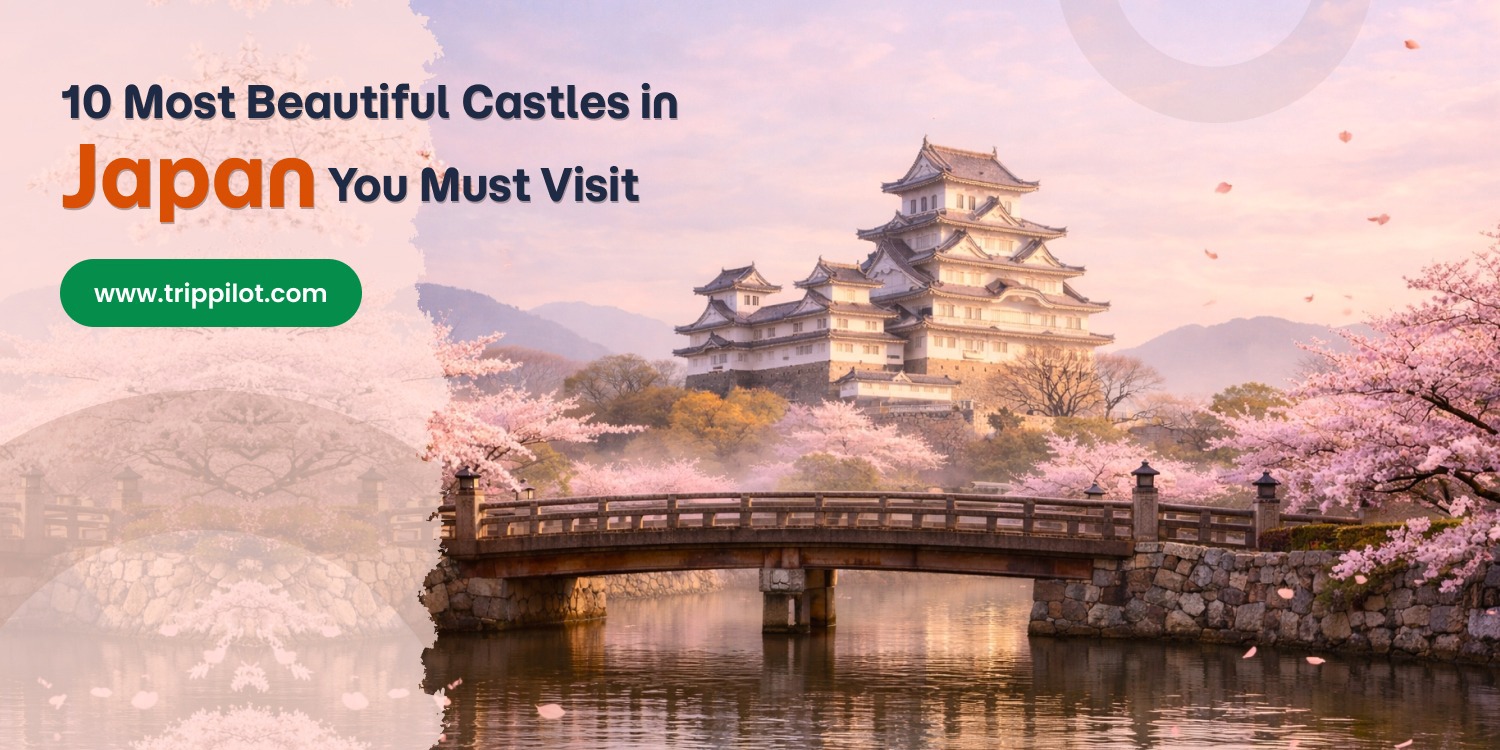
A soft breeze carries cherry blossom petals across a stone bridge. Ahead of you rises a white tower framed by pink blooms and distant mountains. Inside, steep wooden staircases creak under centuries of history. Visiting castles in Japan is not just about architecture, it’s about stepping into the era of samurai, shoguns, and strategic brilliance.
But planning a Japan castle itinerary can quickly become complicated. Japan once had over 5,000 castles. Today, only 12 original castles from the Edo period remain. Some are reconstructions. Others are ruins perched above seas of clouds. Timing matters especially if you want cherry blossoms or autumn foliage. Transportation logistics matter even more.
That’s where smart travel strategy changes everything. With TripPilot, an AI-powered travel planner, you can build a personalized Japan castle route in seconds, optimized for JR Pass holders, cherry blossom forecasts, seasonal events, travel time, and even crowd levels.
If you're searching for the most beautiful castles in Japan, this expert guide combines history, cultural insight, and practical travel planning all in one place.
Key Takeaways
- Discover Japan’s most beautiful and historically significant castles
- Learn which castles are original vs reconstructed
- Find the best castles for cherry blossom and autumn foliage views
- Get insider transport tips using the Japan Rail Pass
- Plan a seamless, personalized castle itinerary with TripPilot
Table of Contents
10 Most Beautiful Castles in Japan
- Himeji Castle – Japan’s Most Iconic White Fortress
- Matsumoto Castle – The Dramatic Black Crow
- Osaka Castle – Power in the Heart of the City
- Kumamoto Castle – Engineering Genius of the Samurai
- Nagoya Castle – The Golden Roof Guardians
- Inuyama Castle – One of Japan’s 12 Original Castles
- Hikone Castle – Elegant Over Lake Biwa
- Hirosaki Castle – Japan’s Cherry Blossom Wonderland
- Matsuyama Castle – Hilltop Panorama
- Takeda Castle Ruins – The Castle in the Sky
10 Most Beautiful Castles in Japan
Japan is home to some of the world’s most breathtaking castles, blending history, architecture, and natural beauty. From the iconic white elegance of Himeji Castle to the dramatic hilltop views of Matsuyama Castle, each site offers a glimpse into the country’s feudal past. These castles showcase intricate wooden structures, stone fortifications, and seasonal charm—especially during cherry blossom season. Exploring these historic landmarks reveals stories of samurai, shoguns, and strategic warfare, while also offering serene gardens and panoramic vistas. Whether perched on mountains or surrounded by moats, Japan’s castles remain timeless symbols of cultural heritage and architectural brilliance.
Himeji Castle – Japan’s Most Iconic White Fortress
In the historic city of Himeji, Himeji Castle stands as Japan’s most beautiful and best-preserved feudal castle.
Built in the early 1600s and designated a UNESCO World Heritage Site, it is one of the few original castles that survived World War II bombings and natural disasters. Its brilliant white plaster walls earned it the nickname “White Heron Castle.”
Why it’s extraordinary:
- Complex defensive maze of gates and hidden paths
- Six-story wooden main keep
- 360-degree views of Himeji city
Best time to visit: Late March–early April for cherry blossoms
Entry fee: Approx. ¥1,000
Travel tip: Visit when gates open (9 AM) to avoid peak tour groups.
TripPilot can discover your visit with cherry blossom bloom forecasts and optimize your Shinkansen ride from Kyoto or Osaka in under 60 minutes.
Matsumoto Castle – The Dramatic Black Crow
Located in Matsumoto, Matsumoto Castle is one of Japan’s oldest surviving original castles.
Its black exterior contrasts beautifully against snow-capped Japanese Alps in winter and fiery maple leaves in autumn.
Built in 1594, Matsumoto Castle still features original wooden interiors and narrow defensive staircases offering one of the most authentic feudal-era experiences.
Best season: October–November (autumn foliage)
Photography tip: Visit at sunset for the moat reflections
Nearby experience: Explore wasabi farms or hike in Kamikochi
A free vacation trip planner can create a scenic Nagano route including Matsumoto, alpine hikes, and onsen stays.
Osaka Castle – Power in the Heart of the City
In vibrant Osaka, Osaka Castle represents ambition and political power. Originally built by Toyotomi Hideyoshi in the 1580s, the castle played a central role in Japan’s unification.
Though reconstructed, it remains one of the most visited castles in Japan.
Why visit:
- Massive stone walls
- Cherry blossom park with 3,000+ trees
- Museum exhibits explaining samurai warfare
Best time: Late March–early April
Travel tip: Combine with Dotonbori street food in the evening.
A custom travel itinerary can build a one-day Osaka culture and food itinerary around your castle visit.
Kumamoto Castle – Engineering Genius of the Samurai
In Kumamoto, Kumamoto Castle showcases one of Japan’s most advanced defensive designs.
Despite damage from the 2016 earthquake, restoration has brought much of the structure back to life.
What makes it unique:
- Steep, curved stone walls designed to repel attackers
- Impressive scale and layout
- Historical samurai legends
Best season: Spring cherry blossom festival
Planning tip: Check restoration updates before visiting.
TripPilot automatically suggests backup attractions if sections are temporarily closed.
Nagoya Castle – The Golden Roof Guardians
In Nagoya, Nagoya Castle stands as a powerful symbol of heritage and resilience. Renowned for its iconic golden shachihoko, mythical tiger-fish believed to protect against fire and bring prosperity, the castle reflects deep cultural significance. Although much of the structure has been reconstructed, the Honmaru Palace has been carefully restored to showcase the elegance of Edo-period artistry. Intricate wall paintings, refined wooden architecture, and traditional craftsmanship bring history to life, offering visitors an immersive glimpse into Japan’s feudal past and the grandeur once enjoyed by its ruling elite.
Best time: Spring or autumn
Local food tip: Try miso katsu or hitsumabushi nearby
TripPilot effortlessly crafts a seamless culture-and-cuisine journey through Nagoya, blending iconic heritage sites with authentic local food experiences for stress-free travel planning.
Inuyama Castle – One of Japan’s 12 Original Castles
In the scenic riverside town of Inuyama, Inuyama Castle stands as Japan’s oldest surviving original castle, dating back to 1537. Perched above the Kiso River, it offers breathtaking views and a deep sense of history. Unlike many large-scale reconstructions found across the country, this castle retains its original wooden structure, giving it a rare authenticity. Its compact size creates an intimate atmosphere, allowing visitors to closely connect with Japan’s feudal past while exploring narrow staircases, preserved interiors, and the timeless charm that sets it apart from grander, modernized castles.
Why visit:
- Original wooden framework
- Scenic Kiso River views
- Compact but powerful design
Tip: Combine with Meiji Mura open-air museum.
TripPilot can organize an easy day trip from Nagoya via the Meitetsu Line.
Hikone Castle – Elegant Over Lake Biwa
In the historic city of Hikone, Hikone Castle stands as one of Japan’s finest preserved original castles, offering a rare glimpse into authentic feudal architecture. Unlike reconstructed sites, it retains its original keep, defensive structures, and surrounding grounds, reflecting centuries of history. Perched above the serene waters of Lake Biwa, Japan’s largest freshwater lake, the castle provides breathtaking panoramic views. Visitors can explore its well-maintained interiors, scenic gardens, and tranquil surroundings, experiencing both cultural heritage and natural beauty in one remarkable destination.
Best time: Spring blossoms or autumn colors
Hidden gem: Genkyuen Garden next door
TripPilot can seamlessly combine Hikone with day trips to Kyoto or Nara to enhance the travel experience.
Hirosaki Castle – Japan’s Cherry Blossom Wonderland
Nestled in the northern part of Hirosaki, Hirosaki Castle is often regarded as one of Japan’s most enchanting destinations during cherry blossom season. The castle grounds are home to more than 2,500 cherry trees, which burst into soft pink blooms each spring, transforming the landscape into a dreamlike scene. Visitors can stroll through pathways that form delicate tunnels of blossoms, while the surrounding moats become blanketed with drifting petals, creating a stunning “flower raft” effect. This breathtaking combination of historic architecture and seasonal beauty makes Hirosaki Castle a must-visit spot for anyone seeking a truly magical sakura experience.
Best time: Late April (later bloom than Tokyo)
Experience tip: Evening illuminations are unforgettable.
TripPilot adjusts your route northward based on bloom timing predictions.
Matsuyama Castle – Hilltop Panorama
In Matsuyama, Matsuyama Castle stands proudly atop Mount Katsuyama, offering a perfect blend of history and natural beauty. Visitors can reach the castle either by a convenient ropeway ride or by taking a scenic hike through lush surroundings, making the journey just as memorable as the destination. Once at the top, travelers are rewarded with breathtaking panoramic views that stretch across the city and out toward the serene Seto Inland Sea, creating an unforgettable experience for history lovers and nature enthusiasts alike.
Bonus stop: Dogo Onsen, one of Japan’s oldest hot springs.
TripPilot connects castle sightseeing with traditional ryokan stays.
Takeda Castle Ruins – The Castle in the Sky
Perched high above Asago, the Takeda Castle Ruins create a breathtaking दृश्य often described as a “castle in the sky.” During crisp autumn mornings, a blanket of mist rolls through the valley below, making the ruins appear as though they are floating among the clouds. Although only stone foundations remain today, the panoramic views and surreal atmosphere make this site one of Japan’s most unforgettable experiences.
The best time to witness this magical phenomenon is at sunrise in early autumn, when weather conditions are ideal for mist formation. Travelers are advised to arrive before 7 AM to increase their chances of seeing the iconic cloud effect. Planning ahead is essential, as visibility depends heavily on weather patterns.
TripPilot makes it easier by helping you schedule your visit based on real-time forecasts, ensuring you don’t miss this extraordinary natural spectacle.
How to Plan a Japan Castle Itinerary Efficiently
If you’re planning to visit Japan for 10–14 days, consider this route:
- Kyoto / Osaka base → Himeji (day trip)
- Nagoya → Inuyama
- Nagano → Matsumoto
- Shiga → Hikone
- Kyushu → Kumamoto
Using the Japan Rail Pass makes most of these connections seamless.
TripPilot can automatically:
- Calculate JR Pass value
- Optimize train timing
- Suggest nearby food and cultural stops
- Predict crowd density
This transforms a scattered list into a strategic travel experience.
Frequently Asked Questions
What is the most beautiful castle in Japan?
Himeji Castle is often ranked as the most beautiful due to its original structure, elegant white exterior, and UNESCO status.
How many original castles remain in Japan?
Only 12 original Edo-period castles remain, including Matsumoto, Inuyama, Hikone, and Matsuyama.
When is the best time to visit castles in Japan?
Spring (late March–April) for cherry blossoms and autumn (October–November) for foliage offer the most scenic views.
Can you visit castles with the Japan Rail Pass?
Yes. Most castles are accessible via JR trains, making a castle-hopping itinerary efficient with a JR Pass.
Conclusion
Japan’s castles are far more than historic landmarks—they are enduring symbols of resilience, masterful craftsmanship, and strategic ingenuity. Built across centuries of samurai rule, each castle tells a distinct story shaped by battles, politics, and cultural evolution. From majestic hilltop fortresses to elegant structures surrounded by seasonal beauty, these sites offer unforgettable experiences year-round. Whether you’re admiring delicate cherry blossoms in spring, vibrant autumn foliage, or sweeping panoramic views, every visit reveals a different side of Japan’s rich heritage.
However, the real challenge isn’t simply deciding which castles to explore—it’s planning your journey wisely. With so many remarkable sites spread across the country, a thoughtful itinerary ensures you make the most of your time while uncovering the deeper historical and cultural significance behind each destination.
Share


Search Blogs
Categories
Recent Posts





Subscribe to our Newsletter!
Related Post
 Cultural Trails
10 Most Beautiful Castles in Japan You Must Visit
 Cultural Trails