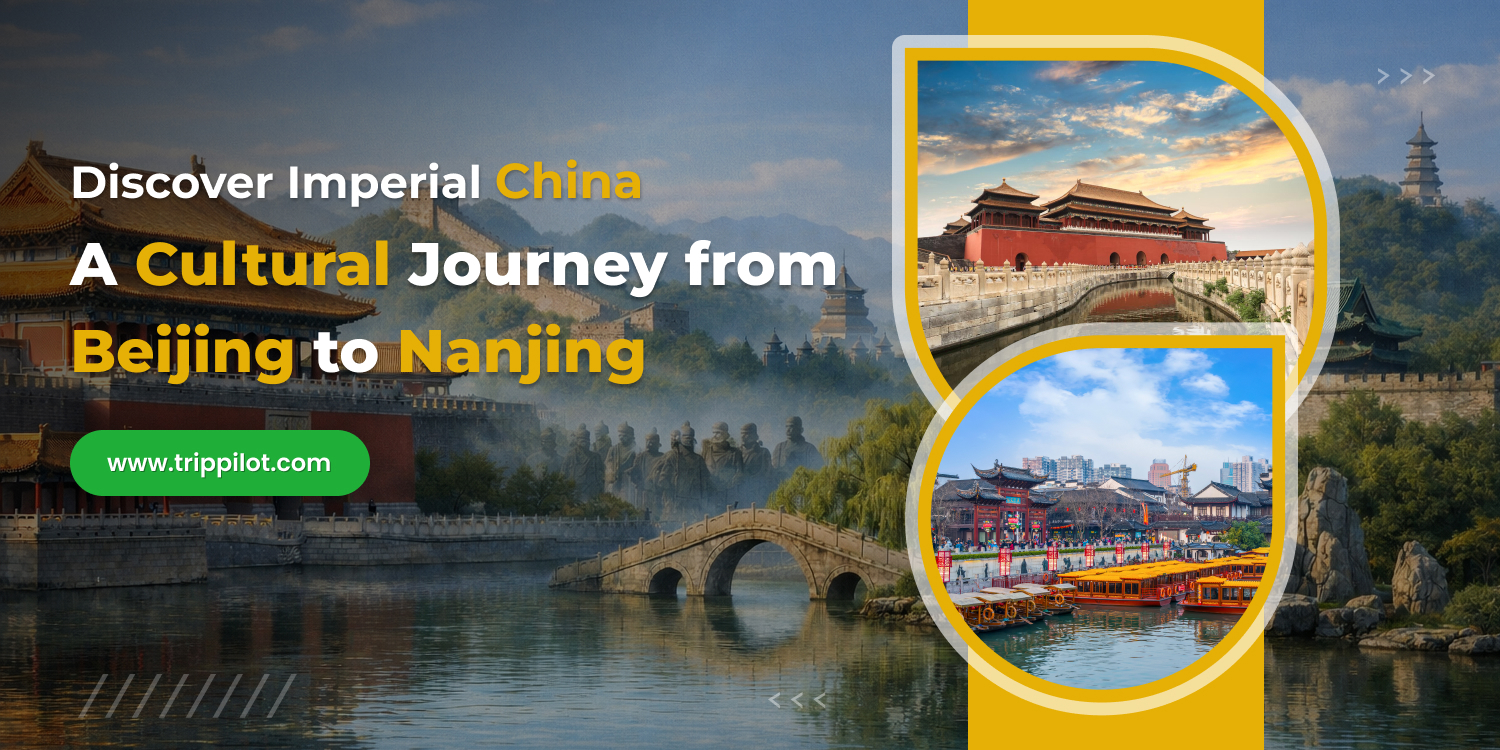
The first time you stand beneath the vermilion gates of Beijing’s Forbidden City, time seems to pause. Emperors once walked these courtyards, shaping dynasties that influenced art, politics, philosophy, and architecture across East Asia. Traveling from Beijing to Nanjing isn’t just a change of cities it’s a journey through the very soul of Imperial China. For modern travelers, the challenge lies in balancing history-rich experiences with smooth logistics across multiple regions. This is where TripPilot steps in as an AI-powered travel planner, helping you transform a complex cultural route into a seamless, deeply personal journey without losing the magic of discovery.
Key Takeaways
- Experience China’s imperial heritage across Beijing, Xi’an, Suzhou, and Nanjing
- Discover UNESCO World Heritage Sites, ancient capitals, and living traditions
- Learn cultural etiquette, food customs, and historical context at each stop
- Save time and money with optimized routes, transport, and attraction planning
- Customize your cultural itinerary effortlessly with TripPilot’s AI travel planner
Table of Contents
- Understanding the Imperial China Route: Why Beijing to Nanjing Matters
- Beijing: Power, Palaces, and Philosophy
- The Great Wall and Northern Defense Legacy
- Xi’an: Where Empires Began
- Suzhou: Gardens, Scholars, and Refined Living
- Nanjing: Southern Capital and Ming Legacy
- Transportation Between Cities: Trains, Timing, and Comfort
- Cultural Etiquette and Local Know-How
Understanding the Imperial China Route: Why Beijing to Nanjing Matters
The Beijing to Nanjing cultural tour follows the historic spine of Imperial China. Beijing represents centralized power and Confucian order, while Nanjing reflects scholarly tradition, early Ming governance, and river-based trade. Between them lie cities that shaped philosophy, commerce, and aesthetics. This route appeals to culture-focused travelers, history lovers, and first-time visitors seeking depth beyond surface sightseeing. TripPilot analyzes travel duration, interests, and pace to design a balanced cultural trail ideal for both short visits and immersive journeys.
Beijing: Power, Palaces, and Philosophy
Beijing stands as the ceremonial core of Imperial China, where power, tradition, and symbolism converge. At its center lies the Forbidden City, an immense palace complex with more than 9,000 rooms, meticulously designed to reflect cosmic harmony and imperial authority. Every courtyard and corridor reinforces the emperor’s role as the “Son of Heaven.” Just beyond, the Temple of Heaven offers a profound contrast, an open, spiritual space where emperors performed sacred rituals to ensure balance between heaven and earth. Together, these landmarks reveal how governance, architecture, and spirituality were deeply intertwined in China’s imperial past.
Local Context and Cultural Insight:
Morning tai chi in public parks reflects Confucian balance, while hutong alleyways preserve daily life patterns unchanged for centuries.
Food Experience:
Start your day with jianbing (savory crepes) from a street vendor or enjoy Peking duck in a traditional courtyard restaurant.
Budget Snapshot (per day):
- Attractions: ₹1,200–2,000
- Food: ₹1,000–1,800
- Local transport: ₹300–500
Travel Tips:
Visit major attractions early to avoid crowds. Allocate at least two full days. The best seasons are spring and autumn for clear skies and walkability.
Custom itinerary services cluster nearby attractions, suggest off-peak visiting hours, and recommend cultural add-ons like Peking opera or calligraphy workshops based on your interests.
The Great Wall and Northern Defense Legacy
No imperial journey through China is complete without witnessing the Great Wall. Stretching across rugged mountains and valleys, sections such as Mutianyu and Jinshanling reveal distinct phases of military innovation, construction techniques, and border defense strategy. Each watchtower and battlement tells a story of protection, power, and perseverance. More than an architectural marvel, the Great Wall stands as a living chronicle of China’s geopolitical history, an enduring narrative carved into the landscape, reflecting centuries of ambition, resilience, and strategic vision.
Travel Tips:
Choose Mutianyu for cable car access or Jinshanling for photography and fewer crowds. Wear sturdy shoes.
AI travel planner compares Wall sections by crowd density, fitness level, and travel time, helping you choose the best match for your schedule.
Xi’an: Where Empires Began
Once the eastern gateway of the legendary Silk Road, Xi’an stands as one of China’s most historically rich cities and the former capital of 13 powerful dynasties. For centuries, it served as a crossroads of trade, culture, and ideas, shaping the foundation of Chinese civilization. Its most extraordinary legacy is the Terracotta Army a vast collection of life-sized soldiers, horses, and chariots created to guard Emperor Qin Shi Huang in the afterlife. Each figure bears unique facial features and expressions, offering an intimate and human glimpse into imperial ambition and ancient craftsmanship. More than an archaeological wonder, the Terracotta Army reflects the emperor’s belief in eternal rule and protection beyond death. Together, Xi’an’s ancient walls, imperial tombs, and cultural heritage tell a compelling story of power, spirituality, and China’s enduring connection to its past.
Cultural Relevance:
Xi’an blends Han Chinese and Muslim traditions, visible in the vibrant Muslim Quarter’s food culture.
Local Life & Food:
In the Muslim Quarter, the scent of cumin lamb skewers and hand-pulled noodles fills the air, reflecting centuries of Silk Road exchange.
We suggest overnight trains or flights from Beijing and times museum visits to avoid tour group peaks.
Suzhou: Gardens, Scholars, and Refined Living
Suzhou reflects the refined and contemplative side of imperial culture, shaped by scholarship, poetry, and a deep appreciation for landscape philosophy. Long celebrated as a center of learning and artistic expression, the city captures an ideal of elegance and balance that defined the literati tradition. Its classical gardens, especially the Humble Administrator’s Garden, are masterpieces of design where water, stone, plants, and architecture are arranged to create natural harmony. These spaces were not merely decorative but intellectual retreats, inviting reflection, creativity, and quiet dialogue with nature.
Local Context:
These gardens were private retreats for officials who had “retired” from court life.
Travel Tips:
Visit the gardens early morning. Combine with a canal boat ride for a complete experience.
Custom itinerary benefits to build half-day cultural loops, pairing gardens with teahouses and silk museums to maximize depth without fatigue.
Nanjing: Southern Capital and Ming Legacy
Nanjing holds a pivotal place in Chinese history as the first capital of the Ming Dynasty. The city reflects a balance of imperial authority and intellectual refinement shaped by Confucian ideals. Landmarks such as the Ming Xiaoling Mausoleum reveal the power and vision of the early Ming rulers through grand yet restrained design, set harmoniously within the natural landscape. The ancient city wall, one of the longest and best preserved in the world, stands as a symbol of strategic strength and civic order. Together, these sites illustrate Nanjing’s role as a seat of governance where military might, scholarly discipline, and thoughtful urban planning coexisted.
Cultural Significance:
Nanjing’s identity blends imperial ambition with academic tradition. It was home to early civil service institutions.
Travel Tips:
Walk sections of the city wall at sunset for panoramic views. Allocate at least two days.
TripPilot maps walkable heritage zones and integrates nearby dining options, reducing transit time and guesswork.
Transportation Between Cities: Trains, Timing, and Comfort
Explore China’s world-class high-speed rail network, which transforms this journey into an experience that is both efficient and visually rewarding. Modern bullet trains seamlessly link major cultural hubs such as Beijing, Xi’an, Suzhou, and Nanjing, allowing travelers to move swiftly between centuries of history without sacrificing comfort. With punctual schedules, spacious seating, and smooth rides, the rail system removes the stress often associated with long-distance travel. Large panoramic windows reveal shifting landscapes from bustling urban skylines to open countryside, adding a scenic dimension to every transfer. Beyond convenience, high-speed rail reflects China’s commitment to sustainable and technologically advanced transportation, making it an ideal choice for culturally focused itineraries. Whether you’re following an imperial trail or exploring regional heritage, the rail network ensures a seamless connection between destinations, turning travel time into a relaxing and memorable part of the overall journey.
Practical Advice:
Book tickets early during the holidays. Choose second-class seats for value or first-class for longer journeys.
TripPilot compares rail vs. flight options in real time, factoring in hotel or rental vacation and total travel duration, not just distance.
Cultural Etiquette and Local Know-How
Respectful behavior plays a vital role in deepening cultural experiences, especially when exploring sacred or historic spaces. Small, mindful gestures such as accepting or offering items with both hands, speaking softly, or dressing modestly show appreciation for local customs and traditions. In temples and spiritual sites, maintaining silence and avoiding disruptive behavior helps preserve the atmosphere of reverence. A helpful real-life approach is to observe before acting. Locals often model appropriate conduct, from where to stand to how to move through the space. By following their lead, visitors naturally align with cultural expectations, foster mutual respect, and gain a more authentic, meaningful connection to the place and its people.
TripPilot provides destination-specific etiquette tips inside your itinerary so you’re culturally prepared at every stop.
Frequently Asked Questions
Is the Beijing to Nanjing cultural tour suitable for first-time travelers?
Yes. The route is well-connected, safe, and rich in iconic landmarks. With TripPilot, first-time visitors can avoid planning stress and focus on experiences.
How many days are ideal for an Imperial China cultural tour?
A well-paced trip takes 10–14 days. TripPilot can compress or extend itineraries based on your travel style and available time.
What is the best time of year to visit Beijing and Nanjing?
Spring (April–May) and autumn (September–October) offer mild weather and clearer skies, ideal for walking tours and photography.
Is English widely spoken along this route?
Major tourist sites have English signage, but translation apps help. TripPilot includes local navigation tips to minimize language barriers.
Conclusion
From the ceremonial grandeur of Beijing to the scholarly calm of Nanjing, this imperial China cultural tour offers more than sightseeing it offers understanding. You walk the same paths as emperors, scholars, and merchants who shaped one of the world’s oldest civilizations. With thoughtful pacing, cultural awareness, and smart logistics, the journey becomes deeply rewarding.
Share


Search Blogs
Categories
Recent Posts





Subscribe to our Newsletter!
Related Post

 Cultural Trails
10 Most Beautiful Castles in Japan You Must Visit
 Cultural Trails