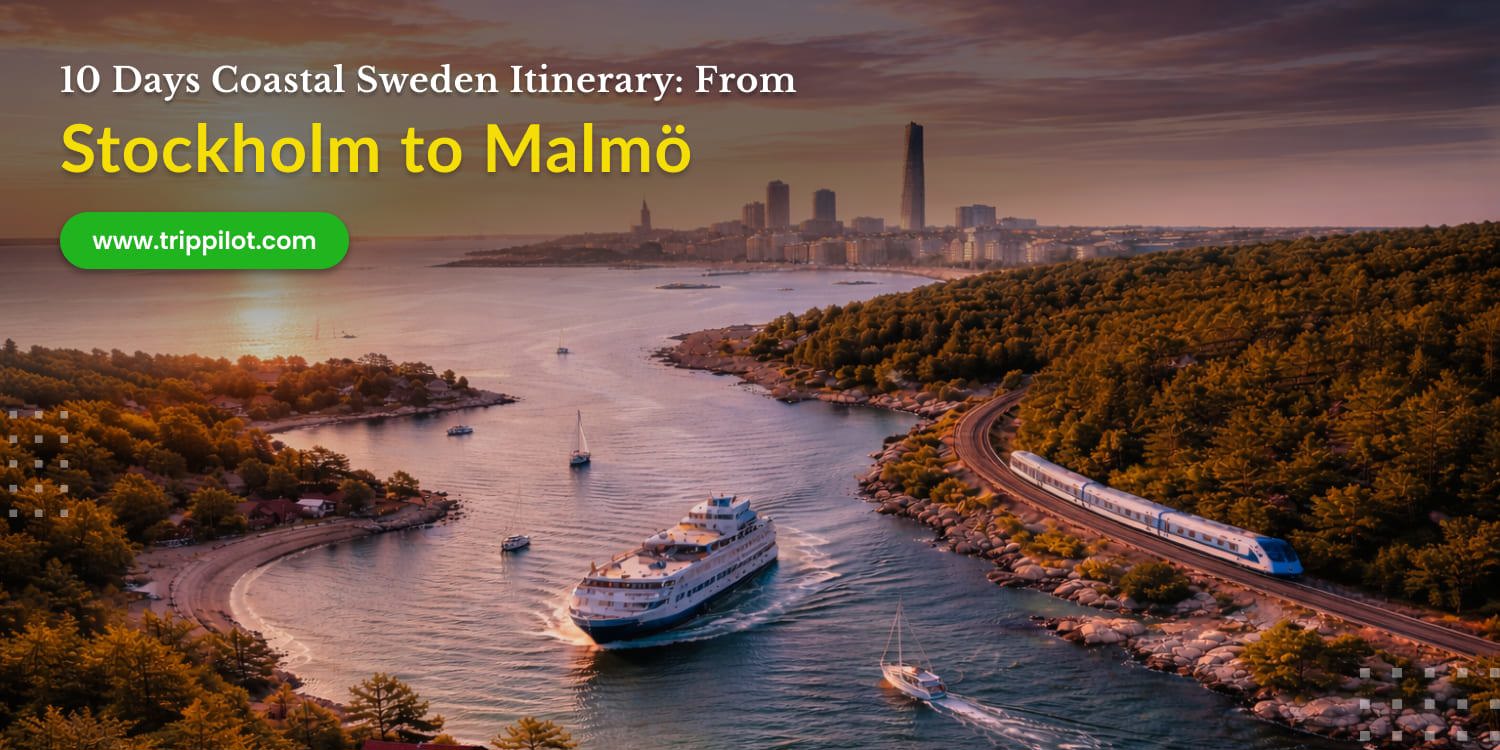
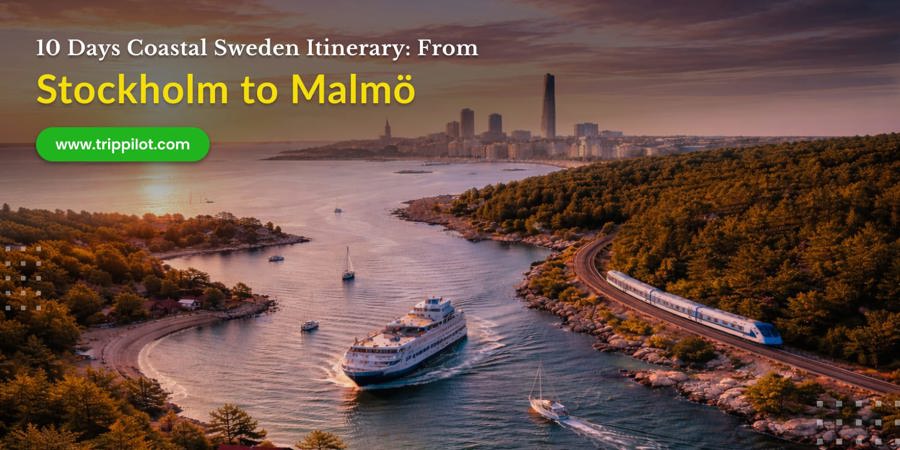
The ferry glides silently through the Stockholm Archipelago as pastel-colored houses reflect on the water, seabirds circling overhead. This is coastal Sweden at its quiet best-unhurried, design-forward, and deeply connected to nature.
Traveling from Stockholm to Malmö along Sweden’s eastern and southern shores isn’t just a journey between cities; it’s a gradual immersion into island life, medieval towns, seafood traditions, and bike-friendly seaside escapes.
The challenge, however, lies in stitching these experiences together efficiently-balancing ferries, trains, regional buses, and seasonal attractions. That’s where TripPilot, an AI-powered travel planner, becomes invaluable, helping you design a seamless, personalized coastal Sweden itinerary that saves time, avoids logistical stress, and adapts to your travel style.
Key Takeaways
- Experience Sweden’s most scenic coastline from Stockholm to Malmö in just 10 days
- Explore archipelagos, medieval towns, beaches, and food-forward coastal cities
- Learn local travel tips on ferries, trains, budgeting, and seasonal planning
- Discover authentic Swedish food culture, from archipelago seafood to Skåne cuisine
- Optimize routes, timing, and accommodations using TripPilot’s AI travel planner
Table of Contents
A 10-Day Coastal Sweden Itinerary
- Stockholm and the Archipelago Gateway
- Uppsala and the Baltic Coast Detour
- Gävle and the High Coast Transition
- Kalmar and Öland’s Island Culture
- Karlskrona and the Blekinge Archipelago
- Ystad and Southern Coastal Charm
- Malmö and the Öresund Finale
A 10-Day Coastal Sweden Itinerary:
Discover Sweden’s stunning coastline on this perfectly paced 10-day Sweden journey from Stockholm to Malmö. Begin in the capital, where medieval streets, royal palaces, and island-dotted waterways set the tone.
Travel south through charming seaside towns, UNESCO-listed landscapes, and laid-back archipelagos, blending culture, nature, and Nordic design.
Enjoy fresh seafood, coastal hikes, historic harbors, and vibrant cities like Gothenburg along the way. This itinerary balances scenic train rides, slow coastal moments, and urban highlights, offering an immersive look at Sweden’s maritime heritage. Ideal for travelers seeking relaxed exploration, local flavors, and breathtaking Baltic and Kattegat Sea views.
Stockholm and the Archipelago Gateway
Stockholm is built across 14 islands, making it the natural starting point for a coastal Sweden adventure. Beyond its museums and royal landmarks, the city’s real magic lies in its relationship with the sea. Locals treat ferries like buses, hopping between islands for work, errands, or weekend escapes.
Start with Gamla Stan for orientation, then head to Djurgården for waterfront walks and cultural stops. Allocate time for the Stockholm Archipelago, which includes over 30,000 islands. Vaxholm is the easiest introduction, offering wooden houses, coastal cafés, and fortress views.
Local tips:
- Public ferries are cheaper than private tours and offer authentic experiences
- Summer daylight is long; plan late-evening island visits
- Pack layers—even sunny days can be breezy on the water
Free vacation trip planner maps ferry schedules, optimizes island-hopping routes, and aligns sightseeing with weather patterns, ensuring you don’t waste precious daylight navigating logistics.
Uppsala and the Baltic Coast Detour
Just north of Stockholm, Uppsala offers a brief inland detour before reconnecting with the coast. Known for its historic university and cathedral, Uppsala adds academic and Viking-era depth to your journey.
From here, head east toward coastal towns like Öregrund, a summer favorite among Swedes. Its quiet harbor, rocky shoreline, and traditional cottages reflect a slower pace of life.
Local tips:
- Öregrund is seasonal; restaurants peak in summer
- Rent a bike to explore nearby coves and beaches
- Try local fish soup (fiskgryta) at harbor eateries
Personalized travel itinerary evaluates seasonal coastal towns, helping you decide which stops fit your Sweden coastal itinerary.
Gävle and the High Coast Transition
Gävle, a lesser-known Swedish coastal city, introduces a quieter side of Baltic Sea travel. Its walkable waterfront and maritime history provide a relaxed pause before heading south.
This region introduces flatter coastal landscapes before transitioning toward southern Sweden’s softer beaches and farmland.
Local tips:
- Coastal trains are scenic—sit on the right-hand side when heading south
- Museums close early outside peak season
- Waterfront paths are ideal for evening walks
TripPilot evaluates whether short coastal stops are worth the time investment based on your interests, ensuring the custom itinerary stays balanced.
Kalmar and Öland’s Island Culture
Kalmar marks a turning point in coastal Sweden. Its Renaissance castle stands dramatically by the sea, and the nearby Öland Bridge connects you to one of Sweden’s most unique islands.
Öland is known for windmills, limestone landscapes, bird reserves, and quiet beaches. It feels rural yet deeply cultural, with strong local traditions.
Local tips:
- Biking is the best way to explore Öland
- Stay overnight to enjoy the sunset beaches
- Local bakeries sell excellent saffron buns
AI travel planner suggests whether to overnight on Öland or visit as a day trip, factoring in transport time, accommodation availability, and your pace preference.
Karlskrona and the Blekinge Archipelago
Karlskrona is a UNESCO-listed naval city spread across a chain of islands, delivering one of Sweden’s most unique coastal settings. Designed in the 17th century as a strategic maritime hub, the city blends historic shipyards, baroque architecture, and sea-facing streets.
Just beyond the city lies the Blekinge Archipelago, a landscape that feels personal and unspoiled compared to Stockholm’s busier waters. Here, sheltered kayaking routes wind past rocky islets, pine-lined shores, and calm inlets.
Small fishing villages dot the coast, where life moves slowly, and traditions remain intact, making the region ideal for travelers seeking authenticity, nature, and quiet maritime charm.
Local tips:
- Kayaking is beginner-friendly due to calm waters
- Island ferries are often free or low-cost
- Seafood here is among the freshest in Sweden
We integrates kayaking, ferry timing, and weather forecasts into your plan, preventing last-minute cancellations or rushed experiences.
Ystad and Southern Coastal Charm
As you approach Skåne, the landscape changes—rolling fields, sandy beaches, and storybook towns replace rocky shores. Ystad is famous for its half-timbered houses and literary connections, but it’s also a coastal gem.
Nearby beaches like Sandhammaren are often ranked among Sweden’s best.
Local tips:
- Beaches are wide and uncrowded even in summer
- Trains connect easily to Malmö and Copenhagen
- Local smoked fish shops are must-visits
TripPilot clusters nearby beaches, towns, and food stops into efficient day plans, ideal for travelers without a car.
Malmö and the Öresund Finale
Malmö feels modern, multicultural, and forward-looking. Its waterfront districts showcase sustainable urban design, while its food scene blends Swedish, Middle Eastern, and European influences.
The Öresund Bridge connects Malmö to Copenhagen, making this a perfect endpoint or gateway to further Scandinavian travel.
Local tips:
- Rent a bike—Malmö is extremely cycle-friendly
- Visit Ribersborg Beach for a city-meets-sea feel
- Book saunas in advance, especially on weekends
TripPilot helps extend your itinerary into Denmark or optimize departure plans, adjusting accommodations and transport seamlessly gives you stress-free travel.
Frequently Asked Questions
Is coastal Sweden expensive for travelers?
Sweden has a reputation for being pricey, but coastal travel can be surprisingly manageable. Using public transport, ferries, and local eateries significantly reduces costs. TripPilot helps identify budget-friendly accommodations and optimizes routes to avoid unnecessary overnight stays.
What is the best time to do a coastal Sweden itinerary?
Late May to early September is ideal. Summer offers long daylight hours and active ferry routes, while late spring provides fewer crowds. TripPilot adjusts recommendations based on seasonal availability and weather trends.
Do I need a car for traveling from Stockholm to Malmö?
A car is optional. Sweden’s train and ferry network is excellent, especially along the coast. TripPilot designs car-free itineraries that align train schedules, ferry crossings, and walkable towns.
Is coastal Sweden suitable for solo travelers?
Yes, Sweden is one of the safest countries in Europe. Coastal towns are calm, English is widely spoken, and public transport is reliable. TripPilot offers safety-focused planning and real-time navigation support.
Conclusion
Traveling Sweden’s coast from Stockholm to Malmö is a journey through shifting landscapes, island cultures, and deeply ingrained respect for nature. Each stop adds a new rhythm—urban archipelagos, quiet fishing towns, sandy southern beaches—woven together by efficient transport and thoughtful design. With the right planning, this 10-day coastal Sweden itinerary becomes both relaxed and richly immersive
Share


Search Blogs
Categories
Recent Posts





Subscribe to our Newsletter!
Related Post

 Travel
4 Perfect Days in Dublin: The Ultimate First-Time Visitor Itinerary
 Travel
The Perfect 6-Day Mauritius Itinerary: Port Louis to Curepipe
 Travel
Plan a 6-Day Trip from Brisbane to Toowoomba: The Ultimate Queensland Itinerary
 Travel
Ultimate 14-Day Scandinavia Road Trip
 Travel
The Perfect 10-Day Uruguay Road Trip: Montevideo to Rocha
 Travel
Ultimate 9-Day Czech Republic Itinerary: From Prague to Ostrava
 Travel
5-Day Bangkok Itinerary: Best Things to Do
 Travel
The Ultimate 3-Day Phu Quoc Itinerary
 Travel
A Journey to the Gulf of Alaska: Discover Where Two Oceans Meet
 Travel
7-Day Lakshadweep Itinerary: Explore Agatti to Minicoy Island Paradise'
_900x450.jpg) Travel
Travel
Sri Lanka Travel Itinerary: The Best Places to Visit in Two Weeks
 Travel
10 Offbeat Things To Do In Belgium
_900x450.jpg) Travel
Travel
Best of Belgium in 7 Days: The Ultimate One-Week Travel Itinerary
_900x450.jpg) Travel
Travel
Plan Your Antarctica Trip 2026: Best Tours, Itineraries & Expert Tips
 Travel
4-Day Maldives Itinerary: Resorts, Budget & Travel Tips
 Travel
How to Plan a Trip to Argentina: Ultimate Travel Guide for First-Time Visitors
 Travel
How to Plan a Singapore Trip: 5-Day Itinerary for First-Time Travelers
 Travel
Top Places to Visit in Vietnam
 Travel
Plan the Perfect Leh Road Trip: Routes, Tips & Hidden Gems
 Travel
Perfect 10-Day Morocco Itinerary: Explore Casablanca, Marrakech & Essaouira
 Travel
Discover Colombia’s Lost City Trek: Ultimate Itinerary & Travel Tips
 Travel
Best Things to Do in Ludington in Summer: A Michigan Travel Guide
_900x450.jpg) Travel
Travel
From Beaches to Bushlands: Fall in Love with Australia
_900x450.jpg) Travel
Travel
Discover Edinburgh City Break Itinerary: 2–4 Day Travel Guide
_900x450.jpg) Travel
Travel
Plan the Perfect 10-Day Turkey Adventure: Istanbul to Cappadocia
 Travel
6-Day Varanasi to Lucknow Itinerary: The Perfect Uttar Pradesh Travel Plan
 Travel
Top 10 Beaches in Brazil for the Ultimate Exotic Beach Vacation
 Travel
A Perfect 10-Day Brazil Itinerary: From Rio to the Amazon
 Travel
The 10 Best Places to vist in Ghana
 Travel
How to Plan a 7-Day Calgary to Jasper Itinerary
 Travel
The Ultimate 6-Day Iceland Itinerary: Waterfalls, Glaciers & Northern Lights
 Travel
Stockholm City Break: A Perfect Short Escape in Sweden
 Travel
A 10-Day Coastal Sweden Itinerary: From Stockholm to Malmö
 Travel
Best National Parks to Visit in Europe
_900x450.jpg) Travel
Travel
AI Travel: What are the Pros and Cons for Travelers?
 Travel
9-Days Las Vegas to Los Angeles Itinerary: The Perfect Southwest Road Trip
 Travel
Peru in 12 Days: A Complete Cultural Journey from Lima to Cusco
 Travel
7-Day Uttarakhand Itinerary: The Ultimate Travel Plan for Haridwar, Rishikesh & Mussoorie
 Travel
Ultimate 8-Day Australia Trip Plan: Sydney to Cairns
 Travel
Plan Your 8-Day New Zealand Trip: Auckland to Queenstown Route
 Travel
6 Days in Malaysia: A Perfect Itinerary Covering Kuala Lumpur, Penang & Langkawi
 Travel
Explore Australia in 6 Days: Adelaide to Melbourne Travel Guide
 Travel
10 Hidden Islands Of Greece You Must see
 Travel
Explore Macao in 8 Days
 Travel
How AI is Revolutionizing Travel Planning
 Travel
10 Days in Vietnam: North-to-South Travel Guide
 Travel
From Mar del Plata to Puerto Madryn: The Ultimate 9-Day Argentina Beach Getaway
 Travel
Explore Ontario in 6 Days: A Complete Road Trip Guide
 Travel
Explore Southern China in 6 Days: Complete Quanzhou to Hong Kong Itinerary
_900x450.jpg) Travel
Travel
Discover Corsica in 6 Days: Ajaccio to Bonifacio Trip Guide
 Travel
How to Explore South Africa in 9 Days: The Ultimate Safari, Cities & Coastlines Adventure
 Travel
Explore Egypt in 7 Days: From Cairo’s Wonders to Luxor’s Ancient Temples
_900x450.jpg) Travel
Travel
Explore France in 9 Days: From Paris to Nice
 Travel
Explore the Caribbean in 16 Days: Complete Miami to Havana Itinerary
 Travel
Your Perfect 6-Day Tokyo Plan
_900x450.jpg) Travel
Travel
9-Day Journey from Cambridge to Bristol: History, Culture & Scenic Stops
 Travel
Explore Alaska in 6 Days: From Anchorage to Juneau
 Travel
Plan Your 6 Days Travel from Quanzhou to Hong Kong
 Travel
Thailand in 9 Days: Perfect Phuket to Bangkok Travel Itinerary
 Travel
Explore the Garden Route: A Complete 9-Day Journey from Cape Town to Port Elizabeth
 Travel
Plan your Southeast Asia Escape: Singapore to Bangkok
_900x450.png) Travel
Travel
Explore Bali in 11 Days
 Travel
10-Day Spain Itinerary From Madrid to Zaragoza
 Travel
Explore Dubai to Sharjah in 9 Days
 Travel
London to Rome in 7 Days: A Customizable Journey Through Europe’s Most Iconic Cities
 Travel
Customize Your 6-Day Trip from San Francisco to New York
 Travel
Plan Your 8-Day Trip from San Francisco to Los Angeles
 Travel
Explore New York & Boston: A 5-Day Itinerary You Can Customize from Anywhere
 Travel
The Ultimate Guide to Travel Types
 Travel