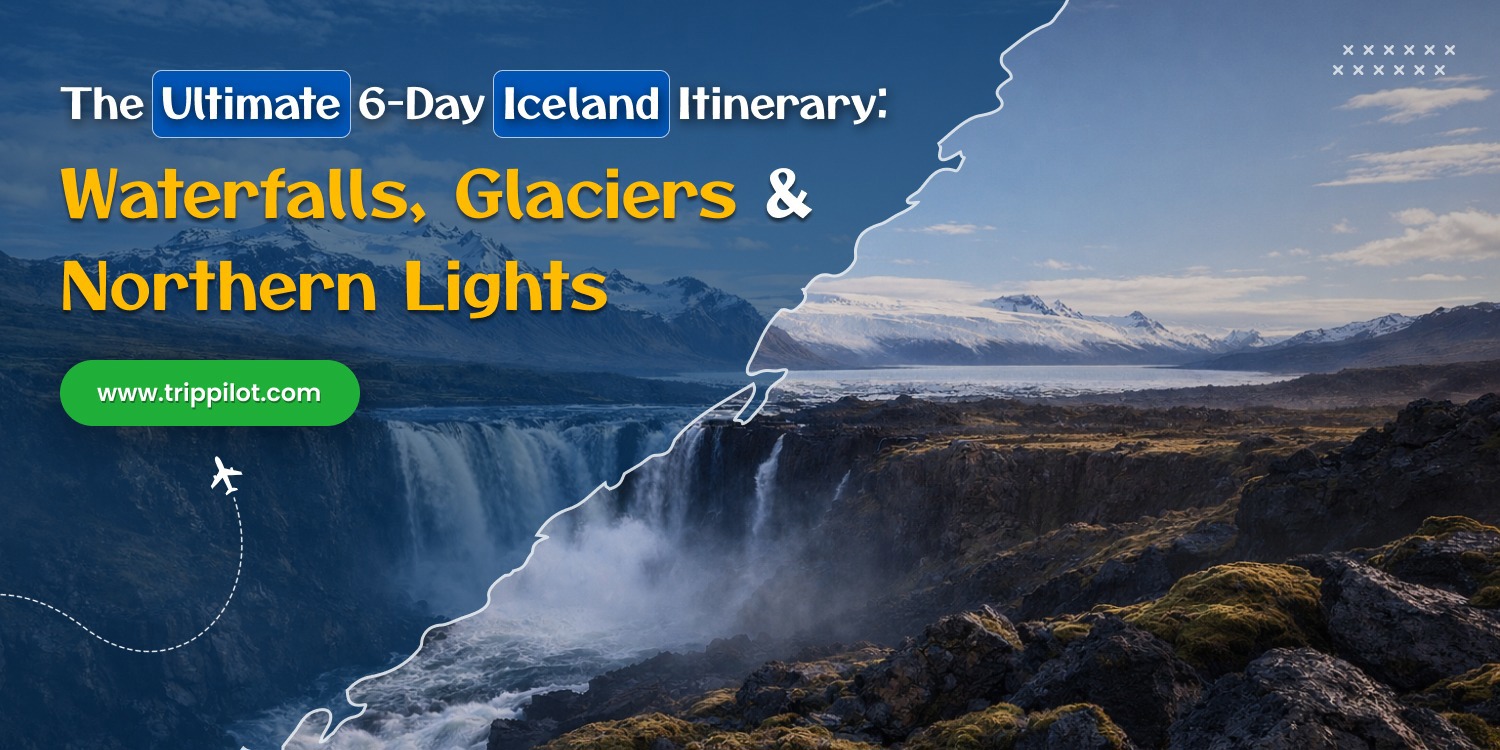
The moment you step outside Keflavík Airport, Iceland doesn’t ease you in—it hits you with raw beauty. Steam rises from the earth, lava fields stretch endlessly, and the sky feels impossibly wide. You came for waterfalls, glaciers, and maybe a glimpse of the Northern Lights, but with limited time, unpredictable weather, and long driving distances, planning Iceland can quickly feel overwhelming.
That’s where a smart plan makes all the difference. This ultimate 6-day Iceland itinerary is designed to help you experience the country’s most iconic landscapes without rushing or missing hidden gems. And with TripPilot, an AI-powered travel planner, you can adapt this journey to your travel style, budget, and season while avoiding common pitfalls first-time visitors face.
Key Takeaways
- Covers Iceland’s must-see highlights in just 6 days without burnout
- Includes waterfalls, glaciers, black sand beaches, and Northern Lights viewing
- Optimized for self-drive travelers with realistic timing and safety tips
- Packed with local insights, food stops, and seasonal advice
- Shows how TripPilot’s AI travel planner saves time, money, and planning stress
Table of Contents
- Day 1: Arrival in Reykjavik & Blue Lagoon Reset
- Day 2: Golden Circle Wonders
- Day 3: South Coast Waterfalls & Black Sand Beaches
- Day 4: Glacier Adventures & Ice Caves
- Day 5: Eastern Detours or Scenic Return
- Day 6: Northern Lights & Farewell Iceland
6-Day Iceland Itinerary
Discover the raw beauty of the Land of Fire and Ice with this 6-Day Iceland Itinerary, designed to help you experience the country’s most iconic landscapes in just under a week. From cascading waterfalls, black-sand beaches, and dramatic glaciers to geothermal hot springs and volcanic terrain, each day is carefully planned for maximum impact. Explore the Golden Circle, drive along the South Coast, chase waterfalls and northern lights (seasonal), and soak in Iceland’s natural wonders without feeling rushed. Perfect for first-time visitors, this itinerary balances adventure, scenic drives, and cultural highlights for an unforgettable Icelandic journey.
Day 1: Arrival in Reykjavik & Blue Lagoon Reset
Your Iceland adventure begins in Reykjavik, one of the world’s smallest yet most creative capitals. After landing at Keflavík International Airport, pick up your rental car—self-driving is the most flexible way to explore Iceland.
Most travelers head straight to the Blue Lagoon, and for good reason. Soaking in warm, mineral-rich geothermal water after a long flight resets your body and mind. Book tickets in advance, especially during peak seasons.
Spend the evening exploring Reykjavik’s compact city center. Walk along Laugavegur Street, admire Hallgrímskirkja Church, and enjoy Nordic cuisine at a local bistro.
Local Tips:
- Blue Lagoon tickets often sell out days ahead
- Winter travelers should plan city sightseeing early due to limited daylight
- Try Icelandic lamb soup for a budget-friendly, authentic meal
TripPilot automatically schedules arrival-day activities based on flight time, helps you overcome jet lag, and spa availability—so you don’t overpack your first day.
Day 2: Golden Circle Wonders
The Golden Circle route is Iceland’s most famous sightseeing loop, and it delivers big scenery with minimal driving.
Start at Þingvellir National Park, where the Eurasian and North American tectonic plates slowly drift apart. It’s also a UNESCO World Heritage Site and the birthplace of Iceland’s parliament.
Next, head to the Geysir geothermal area, home to Strokkur geyser, which erupts every few minutes. Continue to Gullfoss Waterfall, a thunderous, two-tier cascade that’s breathtaking year-round.
Optional detours include Kerið Crater or local dairy farms for fresh skyr.
Travel Tips:
- Visit early morning or late afternoon to avoid tour bus crowds
- Winter roads may be icy check conditions daily
- Pack waterproof layers near waterfalls
TripPilot optimizes driving order, predicts crowd levels, and adjusts routes based on weather alerts—crucial for Golden Circle safety.
Day 3: South Coast Waterfalls & Black Sand Beaches
Day three showcases some of Iceland’s most photographed landscapes. Begin with Seljalandsfoss, where you can walk behind the waterfall, followed by the powerful Skógafoss nearby.
Continue east to Reynisfjara Black Sand Beach, known for basalt columns and crashing Atlantic waves. Follow safety signs carefully sneaker waves are dangerous.
End the day near Vík or Skaftafell, depending on pace and daylight.
Local Context:
- These waterfalls are fed by glacial melt
- Basalt columns formed from cooling lava flows
- South Coast weather changes fast—sun to snow in minutes
Create travel itinerary online builds buffer time into waterfall stops and reroutes plans if weather visibility drops.
Day 4: Glacier Adventures & Ice Caves
Today is all about ice. Explore Vatnajökull National Park, home to Europe’s largest glacier. Popular activities include glacier hiking and ice cave tours (winter only).
Visit Jökulsárlón Glacier Lagoon, where massive icebergs drift toward the sea, and walk across the road to Diamond Beach, where ice fragments sparkle against black sand.
This is one of Iceland’s most surreal experiences.
Safety & Planning Tips:
- Glacier tours must be guided
- Ice caves are seasonal (typically November–March)
- Dress in layers and waterproof boots
We recommend certified tour operators, syncs activity timing with daylight hours, and updates plans if conditions close access.
Day 5: Eastern Detours or Scenic Return
Depending on energy and season, either continue exploring lesser-known glacier viewpoints or begin the scenic drive back west.
Stop at Fjaðrárgljúfur Canyon, a dramatic moss-covered gorge, or relax at hidden hot springs if road conditions allow.
Return overnight accommodations closer to Reykjavik for easier departure the next day.
Cultural Insight:
- Many remote areas have no gas stations plan fuel stops
- Respect moss-covered landscapes; they take decades to recover
TripPilot monitors fuel availability, rest stops, and driving fatigue to suggest optimal overnight locations.
Day 6: Northern Lights & Farewell Iceland
If traveling between September and March, tonight is your chance to chase the Northern Lights in Iceland. Clear skies and low light pollution are key.
Spend your final day exploring Reykjavik museums or coastal walks before heading out for aurora viewing after dark.
Northern Lights Tips:
- Activity depends on solar forecasts
- Avoid city lights
- Be patient—displays can last minutes or hours
Custom travel services track aurora forecasts, cloud cover, and geomagnetic activity, suggesting the best viewing windows in real time.
Frequently Asked Questions
Is 6 days enough to see Iceland’s highlights?
Yes, a well-planned 6-day Iceland itinerary covers the Golden Circle, South Coast, glaciers, and Northern Lights—especially with smart routing and timing.
Do I need a car to follow this Iceland itinerary?
Self-driving offers the most flexibility, but TripPilot can also adapt this itinerary for guided tours or mixed transport options.
What is the best time to see the Northern Lights in Iceland?
The best time is from September to March, with peak visibility during clear, dark nights away from city lights.
Is Iceland expensive for travelers?
Iceland can be costly, but planning accommodations, fuel, and food stops in advance—using an AI travel planner—helps manage budgets effectively.
Conclusion
Iceland isn’t just a destination it’s a full sensory experience shaped by fire, ice, and time. From roaring waterfalls and ancient glaciers to black sand beaches and dancing Northern Lights, this 6-day itinerary balances adventure with realism.
With TripPilot, planning Iceland becomes less about stress and more about wonder. Routes adapt, schedules stay flexible, and you travel smarter without missing what makes Iceland unforgettable.
Share


Search Blogs
Categories
Recent Posts





Subscribe to our Newsletter!
Related Post

 Travel
4 Perfect Days in Dublin: The Ultimate First-Time Visitor Itinerary
 Travel
The Perfect 6-Day Mauritius Itinerary: Port Louis to Curepipe
 Travel
Plan a 6-Day Trip from Brisbane to Toowoomba: The Ultimate Queensland Itinerary
 Travel
Ultimate 14-Day Scandinavia Road Trip
 Travel
The Perfect 10-Day Uruguay Road Trip: Montevideo to Rocha
 Travel
Ultimate 9-Day Czech Republic Itinerary: From Prague to Ostrava
 Travel
5-Day Bangkok Itinerary: Best Things to Do
 Travel
The Ultimate 3-Day Phu Quoc Itinerary
 Travel
A Journey to the Gulf of Alaska: Discover Where Two Oceans Meet
 Travel
7-Day Lakshadweep Itinerary: Explore Agatti to Minicoy Island Paradise'
_900x450.jpg) Travel
Travel
Sri Lanka Travel Itinerary: The Best Places to Visit in Two Weeks
 Travel
10 Offbeat Things To Do In Belgium
_900x450.jpg) Travel
Travel
Best of Belgium in 7 Days: The Ultimate One-Week Travel Itinerary
_900x450.jpg) Travel
Travel
Plan Your Antarctica Trip 2026: Best Tours, Itineraries & Expert Tips
 Travel
4-Day Maldives Itinerary: Resorts, Budget & Travel Tips
 Travel
How to Plan a Trip to Argentina: Ultimate Travel Guide for First-Time Visitors
 Travel
How to Plan a Singapore Trip: 5-Day Itinerary for First-Time Travelers
 Travel
Top Places to Visit in Vietnam
 Travel
Plan the Perfect Leh Road Trip: Routes, Tips & Hidden Gems
 Travel
Perfect 10-Day Morocco Itinerary: Explore Casablanca, Marrakech & Essaouira
 Travel
Discover Colombia’s Lost City Trek: Ultimate Itinerary & Travel Tips
 Travel
Best Things to Do in Ludington in Summer: A Michigan Travel Guide
_900x450.jpg) Travel
Travel
From Beaches to Bushlands: Fall in Love with Australia
_900x450.jpg) Travel
Travel
Discover Edinburgh City Break Itinerary: 2–4 Day Travel Guide
_900x450.jpg) Travel
Travel
Plan the Perfect 10-Day Turkey Adventure: Istanbul to Cappadocia
 Travel
6-Day Varanasi to Lucknow Itinerary: The Perfect Uttar Pradesh Travel Plan
 Travel
Top 10 Beaches in Brazil for the Ultimate Exotic Beach Vacation
 Travel
A Perfect 10-Day Brazil Itinerary: From Rio to the Amazon
 Travel
The 10 Best Places to vist in Ghana
 Travel
How to Plan a 7-Day Calgary to Jasper Itinerary
 Travel
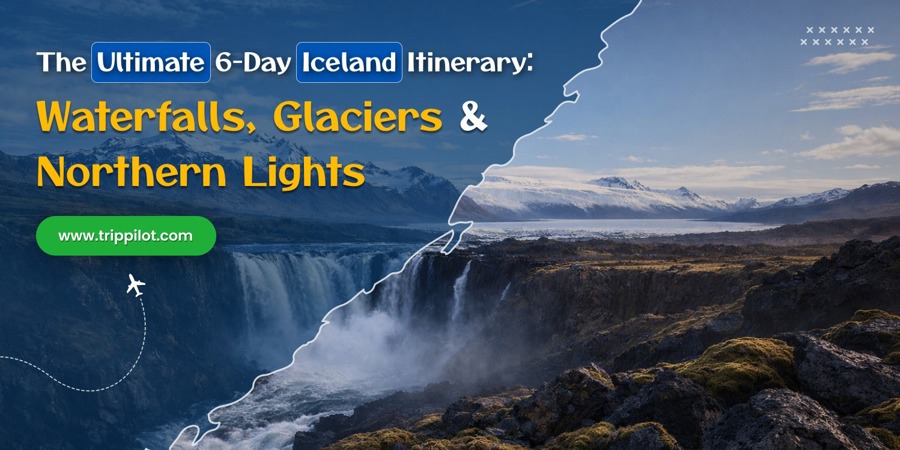
The Ultimate 6-Day Iceland Itinerary: Waterfalls, Glaciers & Northern Lights
 Travel
Stockholm City Break: A Perfect Short Escape in Sweden
 Travel
A 10-Day Coastal Sweden Itinerary: From Stockholm to Malmö
 Travel
Best National Parks to Visit in Europe
_900x450.jpg) Travel
Travel
AI Travel: What are the Pros and Cons for Travelers?
 Travel
9-Days Las Vegas to Los Angeles Itinerary: The Perfect Southwest Road Trip
 Travel
Peru in 12 Days: A Complete Cultural Journey from Lima to Cusco
 Travel
7-Day Uttarakhand Itinerary: The Ultimate Travel Plan for Haridwar, Rishikesh & Mussoorie
 Travel
Ultimate 8-Day Australia Trip Plan: Sydney to Cairns
 Travel
Plan Your 8-Day New Zealand Trip: Auckland to Queenstown Route
 Travel
6 Days in Malaysia: A Perfect Itinerary Covering Kuala Lumpur, Penang & Langkawi
 Travel
Explore Australia in 6 Days: Adelaide to Melbourne Travel Guide
 Travel
10 Hidden Islands Of Greece You Must see
 Travel
Explore Macao in 8 Days
 Travel
How AI is Revolutionizing Travel Planning
 Travel
10 Days in Vietnam: North-to-South Travel Guide
 Travel
From Mar del Plata to Puerto Madryn: The Ultimate 9-Day Argentina Beach Getaway
 Travel
Explore Ontario in 6 Days: A Complete Road Trip Guide
 Travel
Explore Southern China in 6 Days: Complete Quanzhou to Hong Kong Itinerary
_900x450.jpg) Travel
Travel
Discover Corsica in 6 Days: Ajaccio to Bonifacio Trip Guide
 Travel
How to Explore South Africa in 9 Days: The Ultimate Safari, Cities & Coastlines Adventure
 Travel
Explore Egypt in 7 Days: From Cairo’s Wonders to Luxor’s Ancient Temples
_900x450.jpg) Travel
Travel
Explore France in 9 Days: From Paris to Nice
 Travel
Explore the Caribbean in 16 Days: Complete Miami to Havana Itinerary
 Travel
Your Perfect 6-Day Tokyo Plan
_900x450.jpg) Travel
Travel
9-Day Journey from Cambridge to Bristol: History, Culture & Scenic Stops
 Travel
Explore Alaska in 6 Days: From Anchorage to Juneau
 Travel
Plan Your 6 Days Travel from Quanzhou to Hong Kong
 Travel
Thailand in 9 Days: Perfect Phuket to Bangkok Travel Itinerary
 Travel
Explore the Garden Route: A Complete 9-Day Journey from Cape Town to Port Elizabeth
 Travel
Plan your Southeast Asia Escape: Singapore to Bangkok
_900x450.png) Travel
Travel
Explore Bali in 11 Days
 Travel
10-Day Spain Itinerary From Madrid to Zaragoza
 Travel
Explore Dubai to Sharjah in 9 Days
 Travel
London to Rome in 7 Days: A Customizable Journey Through Europe’s Most Iconic Cities
 Travel
Customize Your 6-Day Trip from San Francisco to New York
 Travel
Plan Your 8-Day Trip from San Francisco to Los Angeles
 Travel
Explore New York & Boston: A 5-Day Itinerary You Can Customize from Anywhere
 Travel
The Ultimate Guide to Travel Types
 Travel