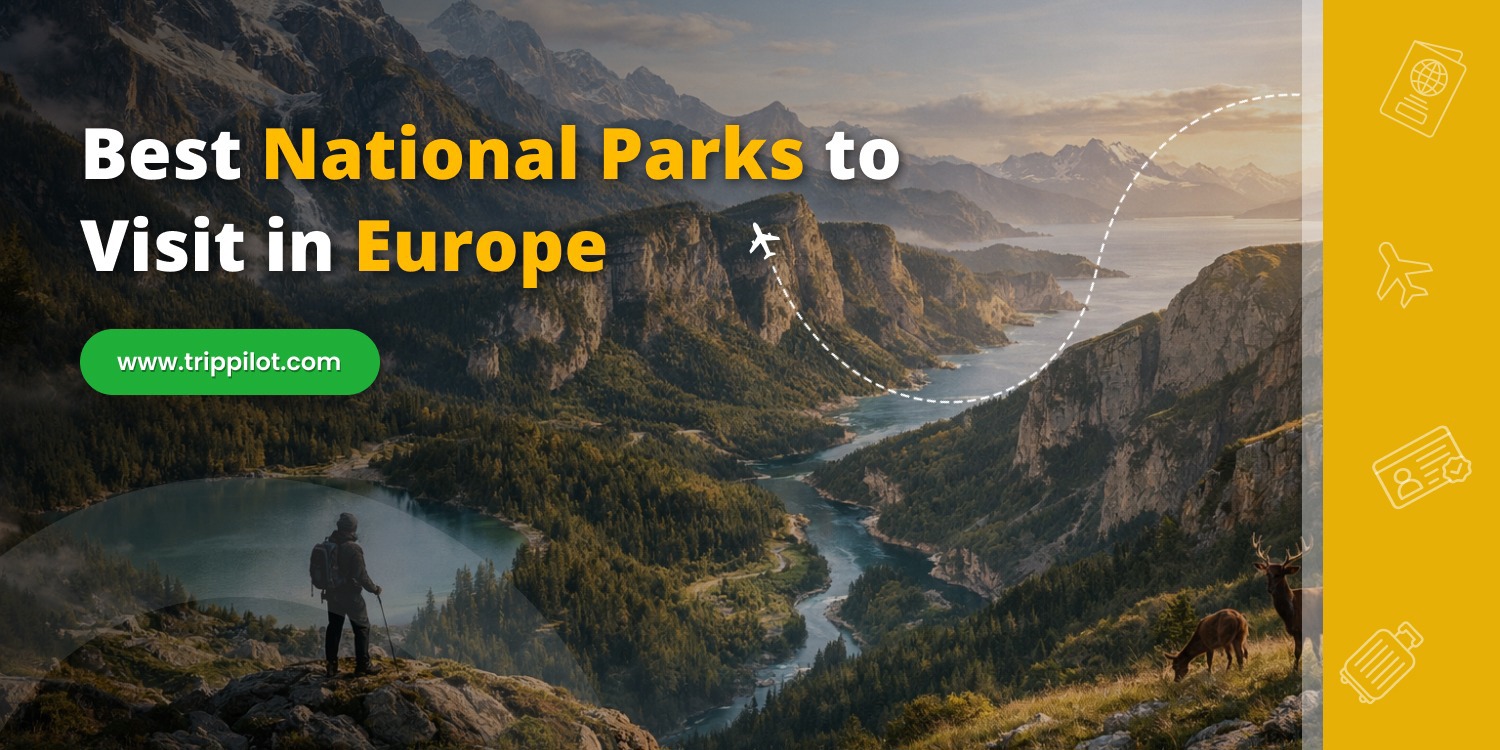
The trail crunches softly beneath your boots as mist lifts from a pine-covered valley. A distant waterfall echoes through the mountains, and for a moment, Europe feels wildly untouched.
While the continent is famous for its cities and culture, its national parks reveal another side raw, cinematic, and deeply restorative. From Arctic tundra to Mediterranean cliffs, Europe’s protected landscapes are a dream for hikers, wildlife lovers, photographers, and slow travelers alike.
Planning these nature-rich journeys, however, often involves juggling seasons, permits, transport, and remote stays. That’s where TripPilot, an AI-powered travel planner, quietly steps in to help you design smarter, smoother adventures without losing the magic of discovery.
Key Takeaways
- Europe offers diverse national parks, from glaciers and fjords to limestone gorges and coastal cliffs
- Each park has unique wildlife, landscapes, and seasonal highlights
- Strategic planning saves time, money, and avoids peak crowds
- Local travel tips enhance safety, sustainability, and cultural respect
- TripPilot simplifies routes, timing, accommodations, and activity planning
# Swiss National Park, Switzerland
Tucked into the Engadin Valley, Swiss National Park is Switzerland’s oldest and most strictly protected natural reserve. Unlike many European parks, human interference here is minimal no biking, no camping, no shortcuts.
The reward is an ecosystem that feels genuinely untouched. Alpine meadows explode with wildflowers in summer, while red deer, ibex, marmots, and golden eagles roam freely.
Culturally, the region reflects Romansh heritage, one of Switzerland’s lesser-known linguistic traditions. Nearby villages like Zernez offer insight into Alpine life shaped by conservation rather than tourism excess.
Travel tips:
Late June to September is ideal, as trails close during winter. Entry is free, but accommodations book early. Public transport is reliable, making cars unnecessary.
TripPilot maps hiking routes based on fitness level, suggests eco-friendly stays, and syncs train schedules so you can explore sustainably without logistical stress.
# Plitvice Lakes National Park, Croatia
Plitvice Lakes feel almost otherworldly, as a chain of turquoise and emerald lakes spill into one another through a network of wooden walkways and dramatic, thundering waterfalls. Recognized as Croatia’s most iconic national park and protected as a UNESCO World Heritage Site, Plitvice is a living showcase of karst geology shaped by centuries of flowing water, mineral deposits, and time.
Dense forests surround the lakes, sheltering rich biodiversity, from vibrant birdlife to rare plant species that thrive in this pristine environment.
Beyond its breathtaking scenery, the park reflects Croatia’s deep cultural respect for water and nature, a value woven into local folklore and long-standing rural traditions. Water here is not just a natural resource but a symbol of life and continuity.
Visiting in the early morning offers a sense of calm and quiet reflection, with mist rising from the lakes, while afternoons bring a lively atmosphere as travelers from around the world gather to experience its magic firsthand.
Travel tips:
Visit in spring or autumn for fewer crowds and vibrant colors. Tickets are timed and sell out fast. Cashless payments are common.
Free travel vacation trip planner secures optimal entry slots, suggests crowd-light itineraries, and pairs Plitvice with nearby cultural stops like Rastoke village.
# Vatnajökull National Park, Iceland
Europe’s largest national park is a dramatic landscape defined by powerful contrasts. Vatnajökull National Park brings together immense glaciers, active volcanic craters, shimmering ice caves, and vast black-sand plains shaped by centuries of fire and ice.
Covering nearly 14% of Iceland’s landmass, the park is a true natural giant and a crown jewel for adventure travelers seeking raw, untamed beauty. Towering ice caps sit beside geothermal forces, creating scenery that feels both ancient and constantly evolving.
Life around Vatnajökull is deeply influenced by this environment. Local culture is rooted in resilience, with farming and fishing communities adapting over generations to a land that can be both generous and unforgiving.
Visitors can explore safely through guided glacier hikes and ice cave tours led by certified local experts. These experiences follow strict safety standards and reflect a deep respect for nature, ensuring that exploration never comes at the cost of preservation.
Travel tips:
Summer offers access to hiking trails, while winter is best for ice caves. Weather changes rapidly—always plan buffers.
Personalized travel adjusts itineraries in real time based on weather alerts and recommends licensed guides and safe-access zones.
# Saxon Switzerland National Park, Germany
Despite its evocative name, this dramatic sandstone wonderland is located in eastern Germany, just outside the historic city of Dresden.
The Elbe Sandstone Mountains are defined by towering rock spires and sculpted cliffs that rise high above the winding Elbe River, creating a landscape that has inspired generations of climbers, painters, and poets.
Among them was the famed Romantic artist Caspar David Friedrich, whose works captured the region’s moody beauty and sense of awe.
Beyond its striking natural formations, the area offers a charming blend of culture and tradition. Storybook villages dot the valleys, while old-fashioned ferry crossings glide across the river, connecting hiking trails and viewpoints.
Traditional German inns welcome travelers with local cuisine and warm hospitality. Visiting here feels like stepping into a living painting-where dramatic scenery and cultural richness come together to create an escape that is both peaceful and deeply inspiring.
Travel tips:
Accessible year-round, but autumn offers stunning foliage. Hiking trails are well-marked; climbing requires permits.
AI travel planner balances outdoor exploration with cultural stops, optimizing day trips from Dresden with transport and meal planning.
# Cinque Terre National Park, Italy
Clinging dramatically to the rugged Ligurian coastline, Cinque Terre National Park preserves a striking blend of natural beauty and human determination.
Steep cliffs plunge into the sea, softened by centuries-old terraced vineyards and narrow coastal paths that connect five vividly colored fishing villages.
These terraces, held together by countless hand-built stone walls, stand as a testament to generations of locals who shaped the land with patience and resilience, turning an unforgiving landscape into a place of life and culture.
Here, nature and daily living are deeply intertwined, and nowhere is that more evident than in the food. The cuisine reflects the terrain and the sea fresh anchovies pulled from nearby waters, fragrant basil transformed into pesto, sun-ripened lemons, and crisp local white wines grown on impossible slopes.
Every meal tells a story of place. Visiting Cinque Terre feels immersive, where scenery, tradition, and flavor come together to create an experience that is both timeless and deeply rooted in the land.
Travel tips:
Avoid peak summer afternoons. Hiking passes are required for certain trails. Trains are the fastest way between villages.
TripPilot designs crowd-aware walking routes, suggests scenic train timings, and pairs hikes with food experiences.
# Sarek National Park, Sweden
For travelers in search of true wilderness, Sarek National Park stands in a class of its own. There are no marked trails, no huts, and no modern facilities-only vast Arctic landscapes shaped by glaciers, braided rivers, and rugged mountain valleys.
Silence dominates here, broken only by wind and wildlife, making the park a raw and demanding destination that requires experience, careful preparation, and deep respect for nature.
Sarek is also a living cultural landscape. The land has long been shaped by the indigenous Sami people, whose traditional reindeer migration routes still cross these valleys and high plains.
Their way of life remains closely tied to the rhythms of the seasons and the terrain. Visitors are not just explorers but guests in this ancestral homeland. Traveling through Sarek is less about comfort or convenience and more about humility-learning to move lightly through a place where nature and culture continue to exist in balance.
Travel tips:
Only suitable for experienced hikers. Summer offers 24-hour daylight; winter requires polar survival skills.
We assess readiness, build safety-first routes, and connect travelers with certified local guides
# Ordesa y Monte Perdido National Park, Spain
Nestled in the heart of the Pyrenees, this national park is defined by dramatic limestone canyons, towering waterfalls, and sweeping alpine plateaus carved over millennia. Sheer cliffs plunge into deep valleys, while rushing rivers and high-altitude meadows create a landscape that feels both powerful and serene.
The park is a haven for hikers, nature lovers, and geology enthusiasts, offering trails that reveal the region’s complex rock formations and ever-changing mountain views.
Beyond its natural appeal, the surrounding villages preserve a strong sense of traditional mountain life. Stone houses, narrow lanes, and quiet squares reflect a culture shaped by altitude and isolation. Local cuisine is hearty and comforting, featuring seasonal ingredients sourced from nearby farms and pastures.
Throughout the year, festivals mark planting and harvest cycles, celebrating community, resilience, and a deep connection to the land. Visiting here offers a blend of outdoor adventure and authentic cultural immersion.
Travel tips:
Spring brings waterfalls; autumn brings color. Shuttle buses regulate traffic in peak season.
Custom itinerary shuttle-compatible itineraries and integrates regional food stops and lodging.
Frequently Asked Questions
What is the best time to visit national parks in Europe?
Late spring and early autumn offer the best balance of good weather, fewer crowds, and lower prices. Alpine parks shine in summer, while Mediterranean parks are better in shoulder seasons.
Are European national parks suitable for families?
Yes, many parks like Plitvice Lakes and Saxon Switzerland offer easy trails and facilities. Always check trail difficulty and safety guidelines in advance.
Do I need permits to visit national parks in Europe?
Most parks allow free or ticketed entry, but activities like hiking certain trails, climbing, or guided tours may require permits.
Can I visit European national parks without a car?
Absolutely. Many parks are accessible by train and bus. TripPilot helps coordinate public transport routes seamlessly.
Are European national parks safe for solo travelers?
Yes, provided you follow local rules, check weather conditions, and choose trails suited to your experience level.
Conclusion
Europe’s national parks reveal the continent at its most honest—untamed, diverse, and deeply connected to local culture. Whether you’re chasing waterfalls, glaciers, coastal paths, or Arctic silence, these protected landscapes reward travelers who plan thoughtfully and travel responsibly. With TripPilot, you can turn complex nature trips into beautifully balanced journeys—combining adventure, safety, and cultural depth without the overwhelm.
Share


Search Blogs
Categories
Recent Posts





Subscribe to our Newsletter!
Related Post

 Travel
4 Perfect Days in Dublin: The Ultimate First-Time Visitor Itinerary
 Travel
The Perfect 6-Day Mauritius Itinerary: Port Louis to Curepipe
 Travel
Plan a 6-Day Trip from Brisbane to Toowoomba: The Ultimate Queensland Itinerary
 Travel
Ultimate 14-Day Scandinavia Road Trip
 Travel
The Perfect 10-Day Uruguay Road Trip: Montevideo to Rocha
 Travel
Ultimate 9-Day Czech Republic Itinerary: From Prague to Ostrava
 Travel
5-Day Bangkok Itinerary: Best Things to Do
 Travel
The Ultimate 3-Day Phu Quoc Itinerary
 Travel
A Journey to the Gulf of Alaska: Discover Where Two Oceans Meet
 Travel
7-Day Lakshadweep Itinerary: Explore Agatti to Minicoy Island Paradise'
_900x450.jpg) Travel
Travel
Sri Lanka Travel Itinerary: The Best Places to Visit in Two Weeks
 Travel
10 Offbeat Things To Do In Belgium
_900x450.jpg) Travel
Travel
Best of Belgium in 7 Days: The Ultimate One-Week Travel Itinerary
_900x450.jpg) Travel
Travel
Plan Your Antarctica Trip 2026: Best Tours, Itineraries & Expert Tips
 Travel
4-Day Maldives Itinerary: Resorts, Budget & Travel Tips
 Travel
How to Plan a Trip to Argentina: Ultimate Travel Guide for First-Time Visitors
 Travel
How to Plan a Singapore Trip: 5-Day Itinerary for First-Time Travelers
 Travel
Top Places to Visit in Vietnam
 Travel
Plan the Perfect Leh Road Trip: Routes, Tips & Hidden Gems
 Travel
Perfect 10-Day Morocco Itinerary: Explore Casablanca, Marrakech & Essaouira
 Travel
Discover Colombia’s Lost City Trek: Ultimate Itinerary & Travel Tips
 Travel
Best Things to Do in Ludington in Summer: A Michigan Travel Guide
_900x450.jpg) Travel
Travel
From Beaches to Bushlands: Fall in Love with Australia
_900x450.jpg) Travel
Travel
Discover Edinburgh City Break Itinerary: 2–4 Day Travel Guide
_900x450.jpg) Travel
Travel
Plan the Perfect 10-Day Turkey Adventure: Istanbul to Cappadocia
 Travel
6-Day Varanasi to Lucknow Itinerary: The Perfect Uttar Pradesh Travel Plan
 Travel
Top 10 Beaches in Brazil for the Ultimate Exotic Beach Vacation
 Travel
A Perfect 10-Day Brazil Itinerary: From Rio to the Amazon
 Travel
The 10 Best Places to vist in Ghana
 Travel
How to Plan a 7-Day Calgary to Jasper Itinerary
 Travel
The Ultimate 6-Day Iceland Itinerary: Waterfalls, Glaciers & Northern Lights
 Travel
Stockholm City Break: A Perfect Short Escape in Sweden
 Travel
A 10-Day Coastal Sweden Itinerary: From Stockholm to Malmö
 Travel
Best National Parks to Visit in Europe
_900x450.jpg) Travel
Travel
AI Travel: What are the Pros and Cons for Travelers?
 Travel
9-Days Las Vegas to Los Angeles Itinerary: The Perfect Southwest Road Trip
 Travel
Peru in 12 Days: A Complete Cultural Journey from Lima to Cusco
 Travel
7-Day Uttarakhand Itinerary: The Ultimate Travel Plan for Haridwar, Rishikesh & Mussoorie
 Travel
Ultimate 8-Day Australia Trip Plan: Sydney to Cairns
 Travel
Plan Your 8-Day New Zealand Trip: Auckland to Queenstown Route
 Travel
6 Days in Malaysia: A Perfect Itinerary Covering Kuala Lumpur, Penang & Langkawi
 Travel
Explore Australia in 6 Days: Adelaide to Melbourne Travel Guide
 Travel
10 Hidden Islands Of Greece You Must see
 Travel
Explore Macao in 8 Days
 Travel
How AI is Revolutionizing Travel Planning
 Travel
10 Days in Vietnam: North-to-South Travel Guide
 Travel
From Mar del Plata to Puerto Madryn: The Ultimate 9-Day Argentina Beach Getaway
 Travel
Explore Ontario in 6 Days: A Complete Road Trip Guide
 Travel
Explore Southern China in 6 Days: Complete Quanzhou to Hong Kong Itinerary
_900x450.jpg) Travel
Travel
Discover Corsica in 6 Days: Ajaccio to Bonifacio Trip Guide
 Travel
How to Explore South Africa in 9 Days: The Ultimate Safari, Cities & Coastlines Adventure
 Travel
Explore Egypt in 7 Days: From Cairo’s Wonders to Luxor’s Ancient Temples
_900x450.jpg) Travel
Travel
Explore France in 9 Days: From Paris to Nice
 Travel
Explore the Caribbean in 16 Days: Complete Miami to Havana Itinerary
 Travel
Your Perfect 6-Day Tokyo Plan
_900x450.jpg) Travel
Travel
9-Day Journey from Cambridge to Bristol: History, Culture & Scenic Stops
 Travel
Explore Alaska in 6 Days: From Anchorage to Juneau
 Travel
Plan Your 6 Days Travel from Quanzhou to Hong Kong
 Travel
Thailand in 9 Days: Perfect Phuket to Bangkok Travel Itinerary
 Travel
Explore the Garden Route: A Complete 9-Day Journey from Cape Town to Port Elizabeth
 Travel
Plan your Southeast Asia Escape: Singapore to Bangkok
_900x450.png) Travel
Travel
Explore Bali in 11 Days
 Travel
10-Day Spain Itinerary From Madrid to Zaragoza
 Travel
Explore Dubai to Sharjah in 9 Days
 Travel
London to Rome in 7 Days: A Customizable Journey Through Europe’s Most Iconic Cities
 Travel
Customize Your 6-Day Trip from San Francisco to New York
 Travel
Plan Your 8-Day Trip from San Francisco to Los Angeles
 Travel
Explore New York & Boston: A 5-Day Itinerary You Can Customize from Anywhere
 Travel
The Ultimate Guide to Travel Types
 Travel