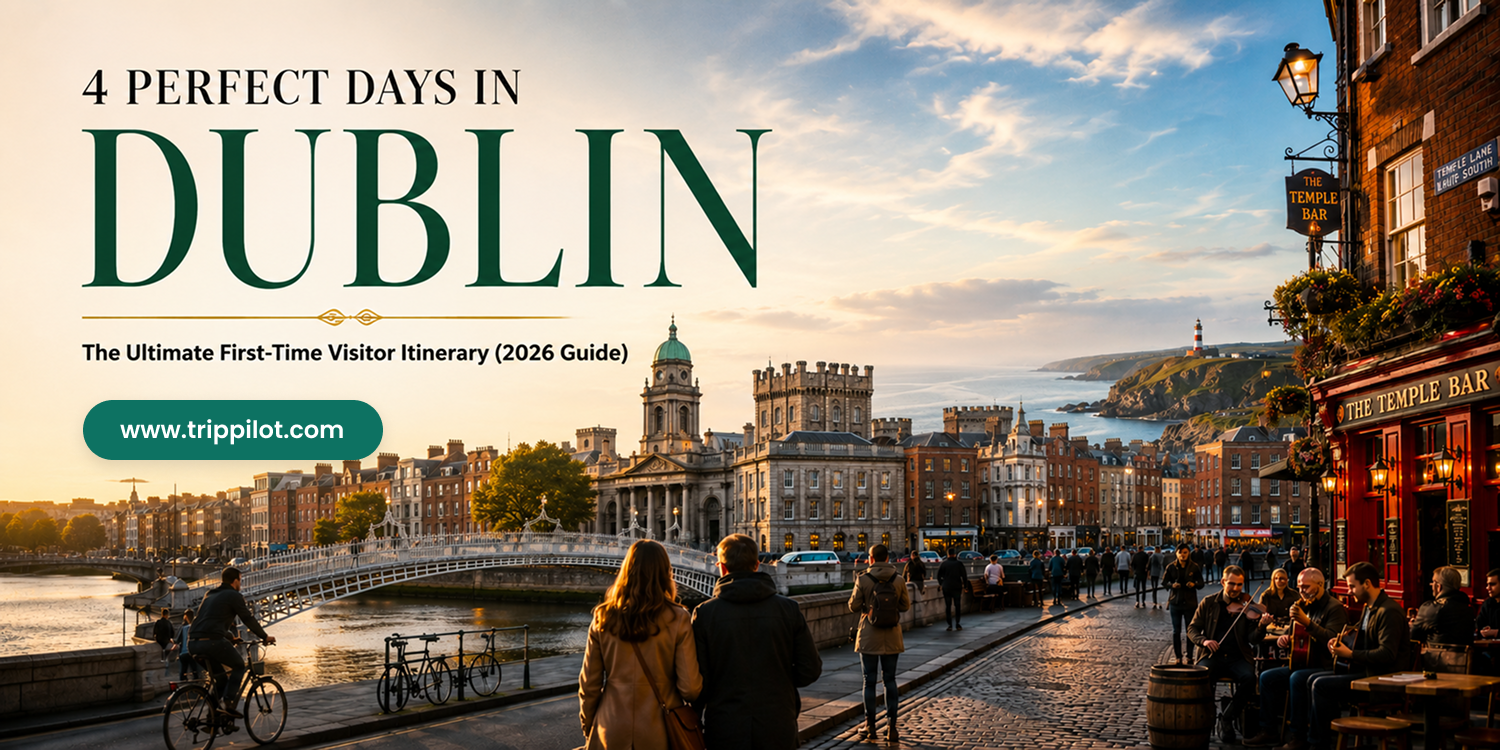
The first glimpse of Dublin often surprises travelers. One moment you're walking through elegant Georgian streets lined with colorful doors, and the next you're listening to traditional Irish music spilling from a centuries-old pub. History blends seamlessly with modern creativity here, creating a city that's welcoming, walkable, and full of unforgettable experiences.
For first-time visitors, however, deciding what to see can quickly become overwhelming. Should you spend more time exploring medieval landmarks, touring famous breweries, discovering literary treasures, or taking a scenic coastal trip? With only four days available, every hour matters.
That's where TripPilot becomes your smartest travel companion. Instead of juggling maps, transport schedules, restaurant reviews, and attraction timings, TripPilot's AI-powered travel planner creates a personalized Dublin itinerary based on your interests, travel style, and budget. Whether you're passionate about history, food, photography, or nightlife, TripPilot helps you maximize every moment while avoiding unnecessary planning stress.
This carefully crafted four-day itinerary combines Dublin's iconic landmarks with authentic local experiences, hidden gems, and practical travel advice to help you experience Ireland's vibrant capital like a seasoned traveler.
Key Takeaways
- Discover Dublin's most iconic attractions in just four well-planned days.
- Explore historic castles, famous pubs, literary landmarks, and scenic coastal villages.
- Learn insider tips for transportation, budgeting, and avoiding tourist crowds.
- Experience authentic Irish food, culture, music, and local neighborhoods.
- Use TripPilot's AI travel planner to customize your itinerary in real time based on weather, opening hours, and personal preferences.
- Save time while creating a balanced itinerary that mixes sightseeing with authentic local experiences.
Table of Contents
Day 1: Discover Dublin's Historic Heart
- Morning: Trinity College and the Book of Kells
- Afternoon: Dublin Castle
- Walk Through Temple Bar
- Evening: Traditional Irish Dinner and Live Music
- End of Day Summary.
Day 2: Parks, Museums, Guinness & Irish Culture
- Morning: St. Stephen's Green
- Continue to Grafton Street
- Afternoon: Guinness Storehouse Experience
- Late Afternoon: St. Patrick's Cathedral
- Evening: Explore the Docklands
- Day 2 Summary
Day 3: Coastal Adventure to Howth – Dublin's Best Day Trip
- Morning: Take the DART to Howth
- Explore Howth Cliff Walk.
- Lunch: Fresh Seafood by the Harbor
- Afternoon: Howth Castle and Village Exploration
- Return to Dublin for an Evening Food Experience
- End of Day Summary
Day 4: History, Green Spaces, and Hidden Gems
- Morning: Kilmainham Gaol
- Important Tip
- Explore Phoenix Park
- Afternoon: EPIC – The Irish Emigration Museum
- Shopping for Irish Souvenirs
- Farewell Dinner
Day 1: Discover Dublin's Historic Heart
Your first day is dedicated to exploring the city's rich history and famous landmarks. Since many attractions are within walking distance, comfortable shoes are essential.
Morning: Trinity College and the Book of Kells
Start your Dublin adventure at the city's most prestigious university, Trinity College Dublin. Founded in 1592, the campus combines historic architecture with beautiful green spaces.
The highlight is the world-famous Book of Kells, an illuminated manuscript created by Celtic monks over 1,200 years ago. Equally breathtaking is the Long Room Library, featuring towering wooden bookshelves filled with hundreds of thousands of historic books.
Travel Tip
Arrive before 9:30 AM to avoid long queues, especially during summer.
Estimated Visit Time
2–3 hours
TripPilot recommends the best entry time based on daily visitor trends and automatically adjusts your schedule if tickets are sold out.
Afternoon: Dublin Castle
Only a short walk away sits Dublin Castle, one of Ireland's most significant historical sites.
Originally built in the 13th century, the castle served as the center of British administration for centuries before becoming an important government complex.
Highlights include:
- State Apartments
- Chapel Royal
- Medieval Viking excavation
- Beautiful castle gardens
History enthusiasts can easily spend several hours exploring the exhibitions and underground remains.
Nearby cafés make excellent lunch stops before continuing your adventure.
Walk Through Temple Bar
Temple Bar is one of Dublin's most recognizable neighborhoods.
Although famous for nightlife, it's equally enjoyable during the afternoon when artists, musicians, independent shops, and cafés fill the cobbled streets.
Don't miss:
- Street performers
- Irish craft shops
- Local galleries
- Small bookstores
- Riverside walks along the River Liffey
While many visitors only stop for photographs, spending an hour wandering the neighborhood offers a much richer experience.
Evening: Traditional Irish Dinner and Live Music
No first visit to Dublin is complete without experiencing authentic Irish hospitality.
Popular dishes include:
- Irish Beef Stew
- Fish and Chips
- Seafood Chowder
- Shepherd's Pie
- Guinness Pie
After dinner, enjoy live traditional Irish music at one of Dublin's historic pubs. Many venues feature local musicians performing folk songs every evening, creating an atmosphere that's both lively and welcoming.
Unlike ticketed performances, many pub sessions are free to enjoy with food or drinks.
Local Tip
Weekday evenings are generally less crowded than weekends while offering equally authentic performances.
End of Day Summary
Today's highlights:
- Trinity College
- Book of Kells
- Dublin Castle
- Temple Bar
- Traditional Irish music
Approximate walking distance: 7–9 km
Estimated budget: €80–€140 per person depending on attraction choices.
Day 2: Parks, Museums, Guinness & Irish Culture
Day two explores Dublin's cultural side, combining peaceful parks, world-famous breweries, fascinating museums, and local neighborhoods.
Morning: St. Stephen's Green
Begin your morning in Dublin's most beautiful public park.
St. Stephen's Green offers peaceful walking paths, flower gardens, lakes filled with ducks, sculptures, and shaded benches that make it ideal for a relaxing start.
Many locals stop here before work, giving visitors a glimpse into everyday Dublin life.
Spring and summer are especially beautiful when flowers bloom throughout the Victorian gardens.
Continue to Grafton Street
Leaving the park, you'll enter one of Ireland's busiest shopping streets.
Grafton Street isn't just about shopping it's famous for talented street musicians, independent boutiques, cafés, and lively entertainment throughout the day.
Take time to browse local Irish products such as:
- Handmade wool scarves
- Celtic jewelry
- Irish chocolates
- Traditional crafts
- Local artwork
It's also an excellent place for coffee and people-watching.
Afternoon: Guinness Storehouse Experience
One of Ireland's most visited attractions, the Guinness Storehouse offers far more than a brewery tour.
Spread across seven interactive floors, visitors learn about:
- Brewing ingredients
- Guinness history
- Advertising campaigns
- Brewing science
- Irish culture
- Beer pouring techniques
The experience ends at the Gravity Bar, offering panoramic views across Dublin while enjoying a complimentary pint or soft drink.
Even non-beer drinkers often rank this as one of Dublin's top attractions due to its immersive storytelling and city views.
Travel Tip
Book tickets in advance during peak travel months.
TripPilot compares attraction availability, suggests the least crowded visiting times, and reorganizes your itinerary if weather changes affect outdoor activities.
Late Afternoon: St. Patrick's Cathedral
After the brewery tour, visit the magnificent St. Patrick's Cathedral, Ireland's largest cathedral.
Built over 800 years ago, it showcases stunning Gothic architecture, colorful stained-glass windows, and beautifully landscaped gardens.
Literature lovers will recognize connections to Jonathan Swift, author of Gulliver's Travels, who served as Dean of the cathedral.
The peaceful atmosphere offers a welcome contrast to the busy city center.
Evening: Explore the Docklands
Finish your second day in Dublin's revitalized Docklands district.
Often called Dublin's "Silicon Docks," this waterfront neighborhood blends modern architecture with excellent restaurants, scenic canals, and lively evening cafés.
Visitors can enjoy:
- Waterfront walks
- Modern Irish cuisine
- Sunset photography
- Contemporary public art
- Riverside dining
It's an excellent place to experience Dublin's modern identity beyond its historic landmarks.
Day 2 Summary
Today's highlights:
- Stephen's Green
- Grafton Street
- Guinness Storehouse
- Patrick's Cathedral
- Dublin Docklands
Approximate walking distance: 8–10 km
Estimated budget: €90–€150 depending on attraction tickets and dining choices.
Day 3: Coastal Adventure to Howth – Dublin's Best Day Trip
After two days exploring Dublin's city center, it's time to discover Ireland's breathtaking coastline. Just 30–40 minutes from the city by DART (Dublin Area Rapid Transit), the charming fishing village of Howth offers dramatic sea cliffs, fresh seafood, scenic hiking trails, and a slower pace of life. It's one of the best day trips from Dublin and a favorite among locals.
Morning: Take the DART to Howth
Catch an early morning DART train from Connolly or Tara Street Station. The ride itself is scenic, passing coastal neighborhoods and offering glimpses of Dublin Bay.
Once you arrive, stroll around the picturesque harbor where colorful fishing boats, playful seals, and cozy cafés create a postcard-perfect setting.
Arrive before 10:00 AM if you want to enjoy the harbor before it gets busy with weekend visitors.
Personalize itinerary checks live train schedules, suggests the best departure times, and recommends alternate routes if service disruptions occur.
Explore Howth Cliff Walk
The Howth Cliff Walk is one of Ireland's most rewarding coastal hikes. Depending on your energy level, you can choose from several walking routes ranging from 1.5 to 4 hours.
Along the trail, you'll discover:
- Panoramic views of Dublin Bay
- Rugged sea cliffs
- Historic Baily Lighthouse
- Wildflowers during spring and summer
- Excellent birdwatching opportunities
Photographers will find countless opportunities to capture dramatic coastal scenery.
Ireland's coastal weather can change quickly. Bring a lightweight waterproof jacket and wear comfortable walking shoes with good grip.
Lunch: Fresh Seafood by the Harbor
Howth is renowned for some of the freshest seafood in Ireland.
Popular local dishes include:
- Fish and chips
- Dublin Bay prawns
- Irish oysters
- Mussels
- Seafood chowder
- Smoked salmon
Many harbor restaurants source seafood directly from local fishing boats, ensuring exceptional freshness.
If seafood isn't your preference, you'll also find cafés serving gourmet sandwiches, pastries, vegetarian meals, and specialty coffee.
Free vacation trip planner analyzes reviews, peak dining times, dietary preferences, and your budget to recommend restaurants that best match your travel style.
Afternoon: Howth Castle and Village Exploration
After lunch, explore the peaceful village streets and visit Howth Castle, whose history dates back more than 800 years.
Nearby attractions include:
- Beautiful gardens
- Artisan gift shops
- Local bakeries
- Independent bookstores
- Small art galleries
Unlike Dublin's busier attractions, Howth offers a more relaxed experience where visitors can enjoy authentic local life.
Return to Dublin for an Evening Food Experience
Back in Dublin, spend your evening discovering the city's growing culinary scene.
Consider trying:
- Modern Irish cuisine
- Farm-to-table restaurants
- Craft breweries
- Whiskey tasting experiences
- Artisan dessert cafés
Food lovers may also enjoy joining an evening food tour that introduces traditional Irish recipes alongside contemporary culinary innovations.
End of Day Summary
Today's highlights:
- Scenic DART journey
- Howth Harbor
- Cliff Walk
- Fresh Irish seafood
- Howth Castle
- Dublin evening dining
Approximate walking distance: 8–12 km
Estimated budget: €70–€130 per person.
Day 4: History, Green Spaces, and Hidden Gems
Your final day combines Ireland's fascinating history with peaceful parks, museums, and some last-minute shopping before saying goodbye to Dublin.
Morning: Kilmainham Gaol
Begin your day at one of Ireland's most historically significant landmarks.
Kilmainham Gaol tells the powerful story of Ireland's struggle for independence through guided tours of its preserved prison cells and exhibition spaces.
Knowledgeable guides explain the stories of political prisoners, revolutionary leaders, and the events that shaped modern Ireland.
Tickets frequently sell out several weeks in advance, especially during summer. Reserve early.
We reminds you when bookings open and helps secure your preferred visiting time.
Explore Phoenix Park
After the emotional experience at Kilmainham Gaol, unwind in Phoenix Park, one of Europe's largest enclosed urban parks.
Highlights include:
- Herds of wild deer
- Cycling paths
- Picnic areas
- Historic monuments
- Beautiful gardens
- Wellington Monument
If you're lucky, you may even spot the resident deer grazing freely across the park.
Renting a bicycle is an excellent way to explore more of this expansive green space.
Afternoon: EPIC – The Irish Emigration Museum
For a deeper understanding of Irish culture, visit the award-winning EPIC The Irish Emigration Museum.
Unlike traditional museums, EPIC uses interactive exhibits, digital storytelling, and multimedia experiences to explain how Irish emigrants influenced the world.
Visitors learn about:
- Irish migration history
- Famous Irish inventors
- Literature
- Music
- Politics
- Global Irish communities
It's engaging for both adults and families.
Shopping for Irish Souvenirs
Before leaving Dublin, pick up authentic Irish souvenirs such as:
- Aran wool sweaters
- Irish whiskey
- Handmade pottery
- Celtic jewelry
- Local chocolates
- Traditional Irish tea
Avoid airport prices by shopping in Dublin's city center or local artisan stores.
Farewell Dinner
Celebrate your final evening with a memorable Irish dinner.
Many restaurants offer:
- Seasonal local ingredients
- Traditional music
- Friendly atmosphere
- Irish desserts
- Excellent wine and whiskey selections
Raise a glass to four unforgettable days exploring one of Europe's friendliest capitals.
Where to Stay in Dublin
Choosing the right neighborhood can make your trip more enjoyable.
Temple Bar
Best for:
- Nightlife
- First-time visitors
- Entertainment
City Centre
Ideal for:
- Walking everywhere
- Shopping
- Museums
- Historic attractions
Docklands
Perfect for:
- Business travelers
- Modern hotels
- Waterfront dining
Ballsbridge
Great for:
- Families
- Quiet surroundings
- Luxury accommodations
TripPilot compares accommodation options based on your travel style, budget-friendly travel, and proximity to attractions.
Getting Around Dublin
Dublin is one of Europe's most walkable capitals.
Transportation options include:
- Walking
- Dublin Bus
- Luas tram
- DART coastal railway
- Taxi
- Bike rentals
For visitors staying four days, purchasing a Leap Visitor Card can save money on public transportation.
We automatically estimates travel times and recommends the fastest combination of walking and public transport.
Budget for Four Days in Dublin
Budget Traveler
- Accommodation: €50–€100/night
- Food: €25–€40/day
- Attractions: €20–€40/day
Mid-Range Traveler
- Accommodation: €140–€220/night
- Food: €50–€80/day
- Attractions: €50+/day
Luxury Traveler
- Accommodation: €300+/night
- Fine dining
- Premium tours
- Private experiences
TripPilot helps optimize your custom itinerary service to reduce unnecessary transportation costs while suggesting free attractions and local dining options that fit your budget.
Must-Try Irish Foods
During your stay, don't miss:
- Irish Breakfast
- Beef & Guinness Stew
- Seafood Chowder
- Fish and Chips
- Boxty
- Soda Bread
- Shepherd's Pie
- Sticky Toffee Pudding
- Irish Coffee
Exploring local cuisine is one of the best ways to experience Dublin's culture.
Best Time to Visit Dublin
Dublin is a year-round destination, but each season offers a different experience. Choosing the right time depends on your interests, budget, and preferred weather.
Spring (March to May)
Spring is one of the best times to visit Dublin. Parks and gardens bloom with colorful flowers, temperatures range between 8°C and 15°C (46°F–59°F), and tourist crowds are smaller than in summer.
Best for:
- Sightseeing
- Photography
- Walking tours
- Budget-conscious travelers
Summer (June to August)
Summer brings the warmest weather, long daylight hours (up to 17 hours), and a lively atmosphere with festivals, outdoor concerts, and bustling pub gardens.
However, it's also the busiest and most expensive season.
Best for:
- First-time visitors
- Outdoor activities
- Day trips
- Festivals
Autumn (September to November)
Autumn offers crisp weather, colorful foliage, and fewer tourists. It's an excellent season for exploring museums, castles, and cozy cafés.
Best for:
- Couples
- Food lovers
- Photography
- Lower hotel rates
Winter (December to February)
Winter transforms Dublin into a festive city with Christmas markets, holiday lights, and cozy pubs. While temperatures are cooler (typically 2°C to 8°C / 36°F–46°F), attractions remain open and crowds are lighter after the holiday season.
Best for:
- Christmas markets
- Budget travel
- Pub culture
- Indoor attractions
TripPilot Tip: TripPilot factors in seasonal weather, local events, and accommodation prices to recommend the best travel dates for your interests.
Cultural Tips for First-Time Visitors
Dubliners are known for their warmth and friendliness. Understanding a few local customs can make your trip even more enjoyable.
Be Friendly
A smile and a simple greeting go a long way. Don't hesitate to ask locals for directions—they're often happy to help.
Queue Politely
Whether you're waiting for a bus, ordering coffee, or entering an attraction, queuing is expected.
Pub Etiquette
Traditional Irish pubs are social spaces. If you're ordering drinks for a group, it's common to buy a "round," where each person takes turns paying.
Tipping
Tipping isn't mandatory, but it's appreciated. Around 10–15% is typical for good table service.
Respect Historic Sites
Many landmarks have deep cultural and historical significance. Follow posted guidelines and be respectful during guided tours.
Packing Checklist
Dublin's weather can change quickly, even in summer. Pack versatile clothing and be prepared for occasional rain.
Essentials:
- Comfortable walking shoes
- Lightweight waterproof jacket
- Layered clothing
- Umbrella
- Portable power bank
- Universal travel adapter (Type G plug)
- Reusable water bottle
- Daypack
- Camera or smartphone for photos
TripPilot's packing assistant can generate a customized checklist based on your travel dates and the forecast.
Frequently Asked Questions
Is 4 days enough to explore Dublin?
Yes. Four days is ideal for first-time visitors. You'll have enough time to visit Dublin's top attractions, experience Irish culture, enjoy traditional food, and even take a scenic day trip to Howth without feeling rushed.
What is the best area to stay in Dublin for first-time visitors?
The City Centre and Temple Bar are excellent choices because they're within walking distance of major attractions, restaurants, museums, and public transportation. If you prefer a quieter atmosphere, Ballsbridge or the Docklands are great alternatives.
Do I need a car in Dublin?
No. Dublin is one of Europe's most walkable capitals, and its public transportation network—including buses, the Luas tram, and the DART rail system—makes getting around easy. A car is generally unnecessary unless you're planning to explore the Irish countryside beyond the city.
How much should I budget for 4 days in Dublin?
A mid-range traveler can expect to spend approximately €700–€1,200 for a four-day trip, including accommodation, meals, transportation, and attraction tickets. Budget travelers can spend less by choosing hostels, free attractions, and public transportation.
Is Dublin safe for tourists?
Yes. Dublin is considered one of the safest cities in Europe for visitors. As with any major city, stay aware of your surroundings, keep your valuables secure, and use licensed taxis or trusted ride-hailing services at night.
Conclusion
Dublin is a city where every street has a story, every pub echoes with music, and every neighborhood offers a unique glimpse into Ireland's rich heritage. In just four days, you can explore medieval castles, stroll through centuries-old university grounds, savor authentic Irish cuisine, enjoy breathtaking coastal scenery in Howth, and experience the warm hospitality that makes Dublin so memorable.
While this itinerary provides a well-balanced introduction to Ireland's vibrant capital, every traveler has different interests and priorities. Whether you're passionate about history, literature, food, photography, or nightlife, a personalized itinerary can help you make the most of your time.
Share


Search Blogs
Categories
Recent Posts





Subscribe to our Newsletter!
Related Post
_900x450.png)
 Travel
Canberra Travel Guide 2026: Top Attractions & Hidden Gems
 Travel
4 Perfect Days in Dublin: The Ultimate First-Time Visitor Itinerary
 Travel
The Perfect 6-Day Mauritius Itinerary: Port Louis to Curepipe
 Travel
Plan a 6-Day Trip from Brisbane to Toowoomba: The Ultimate Queensland Itinerary
 Travel
Ultimate 14-Day Scandinavia Road Trip
 Travel
The Perfect 10-Day Uruguay Road Trip: Montevideo to Rocha
 Travel
Ultimate 9-Day Czech Republic Itinerary: From Prague to Ostrava
 Travel
5-Day Bangkok Itinerary: Best Things to Do
 Travel
The Ultimate 3-Day Phu Quoc Itinerary
 Travel
A Journey to the Gulf of Alaska: Discover Where Two Oceans Meet
 Travel
7-Day Lakshadweep Itinerary: Explore Agatti to Minicoy Island Paradise'
_900x450.jpg) Travel
Travel
Sri Lanka Travel Itinerary: The Best Places to Visit in Two Weeks
 Travel
10 Offbeat Things To Do In Belgium
_900x450.jpg) Travel
Travel
Best of Belgium in 7 Days: The Ultimate One-Week Travel Itinerary
_900x450.jpg) Travel
Travel
Plan Your Antarctica Trip 2026: Best Tours, Itineraries & Expert Tips
 Travel
4-Day Maldives Itinerary: Resorts, Budget & Travel Tips
 Travel
How to Plan a Trip to Argentina: Ultimate Travel Guide for First-Time Visitors
 Travel
How to Plan a Singapore Trip: 5-Day Itinerary for First-Time Travelers
 Travel
Top Places to Visit in Vietnam
 Travel
Plan the Perfect Leh Road Trip: Routes, Tips & Hidden Gems
 Travel
Perfect 10-Day Morocco Itinerary: Explore Casablanca, Marrakech & Essaouira
 Travel
Discover Colombia’s Lost City Trek: Ultimate Itinerary & Travel Tips
 Travel
Best Things to Do in Ludington in Summer: A Michigan Travel Guide
_900x450.jpg) Travel
Travel
From Beaches to Bushlands: Fall in Love with Australia
_900x450.jpg) Travel
Travel
Discover Edinburgh City Break Itinerary: 2–4 Day Travel Guide
_900x450.jpg) Travel
Travel
Plan the Perfect 10-Day Turkey Adventure: Istanbul to Cappadocia
 Travel
6-Day Varanasi to Lucknow Itinerary: The Perfect Uttar Pradesh Travel Plan
 Travel
Top 10 Beaches in Brazil for the Ultimate Exotic Beach Vacation
 Travel
A Perfect 10-Day Brazil Itinerary: From Rio to the Amazon
 Travel
The 10 Best Places to vist in Ghana
 Travel
How to Plan a 7-Day Calgary to Jasper Itinerary
 Travel
The Ultimate 6-Day Iceland Itinerary: Waterfalls, Glaciers & Northern Lights
 Travel
Stockholm City Break: A Perfect Short Escape in Sweden
 Travel
A 10-Day Coastal Sweden Itinerary: From Stockholm to Malmö
 Travel
Best National Parks to Visit in Europe
_900x450.jpg) Travel
Travel
AI Travel: What are the Pros and Cons for Travelers?
 Travel
9-Days Las Vegas to Los Angeles Itinerary: The Perfect Southwest Road Trip
 Travel
Peru in 12 Days: A Complete Cultural Journey from Lima to Cusco
 Travel
7-Day Uttarakhand Itinerary: The Ultimate Travel Plan for Haridwar, Rishikesh & Mussoorie
 Travel
Ultimate 8-Day Australia Trip Plan: Sydney to Cairns
 Travel
Plan Your 8-Day New Zealand Trip: Auckland to Queenstown Route
 Travel
6 Days in Malaysia: A Perfect Itinerary Covering Kuala Lumpur, Penang & Langkawi
 Travel
Explore Australia in 6 Days: Adelaide to Melbourne Travel Guide
 Travel
10 Hidden Islands Of Greece You Must see
 Travel
Explore Macao in 8 Days
 Travel
How AI is Revolutionizing Travel Planning
 Travel
10 Days in Vietnam: North-to-South Travel Guide
 Travel
From Mar del Plata to Puerto Madryn: The Ultimate 9-Day Argentina Beach Getaway
 Travel
Explore Ontario in 6 Days: A Complete Road Trip Guide
 Travel
Explore Southern China in 6 Days: Complete Quanzhou to Hong Kong Itinerary
_900x450.jpg) Travel
Travel
Discover Corsica in 6 Days: Ajaccio to Bonifacio Trip Guide
 Travel
How to Explore South Africa in 9 Days: The Ultimate Safari, Cities & Coastlines Adventure
 Travel
Explore Egypt in 7 Days: From Cairo’s Wonders to Luxor’s Ancient Temples
_900x450.jpg) Travel
Travel
Explore France in 9 Days: From Paris to Nice
 Travel
Explore the Caribbean in 16 Days: Complete Miami to Havana Itinerary
 Travel
Your Perfect 6-Day Tokyo Plan
_900x450.jpg) Travel
Travel
9-Day Journey from Cambridge to Bristol: History, Culture & Scenic Stops
 Travel
Explore Alaska in 6 Days: From Anchorage to Juneau
 Travel
Plan Your 6 Days Travel from Quanzhou to Hong Kong
 Travel
Thailand in 9 Days: Perfect Phuket to Bangkok Travel Itinerary
 Travel
Explore the Garden Route: A Complete 9-Day Journey from Cape Town to Port Elizabeth
 Travel
Plan your Southeast Asia Escape: Singapore to Bangkok
_900x450.png) Travel
Travel
Explore Bali in 11 Days
 Travel
10-Day Spain Itinerary From Madrid to Zaragoza
 Travel
Explore Dubai to Sharjah in 9 Days
 Travel
London to Rome in 7 Days: A Customizable Journey Through Europe’s Most Iconic Cities
 Travel
Customize Your 6-Day Trip from San Francisco to New York
 Travel
Plan Your 8-Day Trip from San Francisco to Los Angeles
 Travel
Explore New York & Boston: A 5-Day Itinerary You Can Customize from Anywhere
 Travel
The Ultimate Guide to Travel Types
 Travel