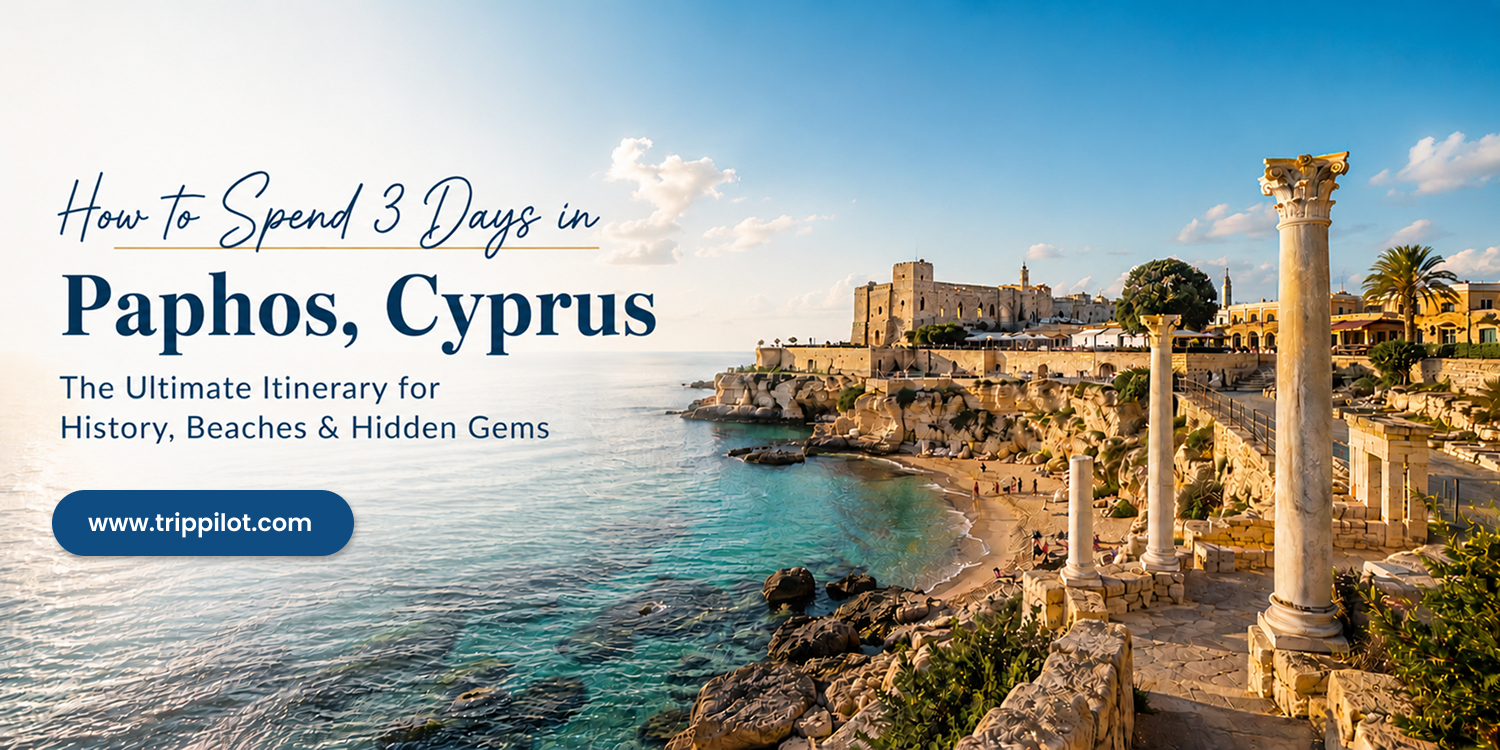
The first glimpse of Paphos feels almost unreal. Golden sunlight reflects off the Mediterranean, fishing boats gently sway in the harbor, and centuries-old ruins stand just steps away from lively cafés serving fresh seafood. It's one of those rare destinations where mythology, history, and beach life blend effortlessly into one unforgettable experience.
But here's the challenge: Paphos offers so much more than its famous archaeological sites. Hidden coves, mountain villages, sea caves, wineries, and local tavernas often get overlooked by travelers who only spend a day here.
That's where smart planning makes all the difference.
Instead of juggling maps, transport schedules, and attraction timings, TripPilot, an AI-powered travel planner, helps create personalized itineraries based on your interests, travel pace, and budget. Whether you're chasing sunsets, exploring UNESCO World Heritage Sites, or discovering authentic Cypriot cuisine, TripPilot helps optimize every moment of your journey.
If you're wondering how to spend 3 days in Paphos, this itinerary balances iconic landmarks with authentic local experiences to help you experience one of Cyprus' most fascinating coastal cities.
Key Takeaways
- Explore the best UNESCO World Heritage Sites in Paphos in just three days.
- Discover beautiful beaches, sea caves, and hidden local neighborhoods beyond the tourist hotspots.
- Experience authentic Cypriot cuisine, local wineries, and traditional villages.
- Save time by planning efficient sightseeing routes with TripPilot's AI-powered itinerary recommendations.
- Get practical budgeting, transportation, and seasonal travel tips for a stress-free holiday.
Spend Day One Exploring Ancient Paphos and the Harbour
The first day is dedicated to discovering why Paphos has been recognized as one of the Mediterranean's most important historical destinations. Nearly every corner tells a story dating back thousands of years.
Start Your Morning at Paphos Archaeological Park
Begin your adventure early, ideally around 8:30 AM, before tour groups arrive and temperatures begin rising.
Located beside the harbor, Paphos Archaeological Park is a UNESCO World Heritage Site famous for preserving Roman villas, mosaics, ancient theaters, temples, and medieval structures.
The true highlights are the spectacular Roman mosaics found inside the:
- House of Dionysos
- House of Theseus
- House of Aion
- House of Orpheus
These intricate floor mosaics have survived for nearly two thousand years and remain among the finest examples anywhere in Europe.
Rather than rushing through the ruins, allow at least two to three hours to appreciate the incredible craftsmanship and historical significance.
Local Tip
Carry water, sunscreen, sunglasses, and comfortable walking shoes. Much of the archaeological park offers limited shade, especially during summer.
Approximate Cost
- Adults: Around €4–5
- Students: Reduced admission available
TripPilot automatically recommends the best visiting hours based on weather forecasts, expected crowd levels, and nearby attractions, helping you avoid peak tourist traffic while maximizing sightseeing time.
Visit the Ancient Odeon and Saranta Kolones Castle
Within the archaeological park lies another fascinating site-the Ancient Odeon.
This beautifully restored Roman amphitheater still hosts concerts and cultural performances throughout the year. If you're visiting during summer, checking the local event calendar could reward you with a memorable evening performance under the stars.
Nearby are the remains of Saranta Kolones Castle, a Byzantine fortress once built to defend Cyprus against invasions.
Although mostly in ruins today, walking through its stone corridors offers a glimpse into medieval military architecture while providing excellent photography opportunities.
Walk to Paphos Harbour
After exploring ancient history, shift into a slower Mediterranean rhythm by strolling toward the picturesque harbor.
This waterfront area combines history with modern leisure.
Colorful fishing boats line the marina while cafés spill onto the promenade overlooking crystal-clear waters.
The atmosphere changes throughout the day:
- Morning offers peaceful harbor views.
- Afternoon becomes lively with visitors and boat excursions.
- Evening transforms into one of Cyprus' best sunset locations.
Spend some time simply watching local fishermen repair their nets or browsing nearby souvenir shops selling handmade Cypriot crafts.
Enjoy Lunch Overlooking the Mediterranean
Seafood is naturally the star attraction in Paphos.
Some popular dishes include:
- Grilled Sea Bream
- Octopus
- Calamari
- Halloumi Cheese
- Village Salad
- Fresh Mediterranean Meze
Many harbor restaurants prepare fish caught the very same morning.
If you're new to Cypriot cuisine, ordering a traditional Meze offers the best introduction. Rather than choosing one meal, you'll sample dozens of small dishes showcasing local flavors.
Budget
- Casual Lunch: €15–20
- Seafood Restaurant: €25–40 per person
TripPilot recommends restaurants based on your dietary preferences, budget-friendly travel, traveler reviews, and walking distance, making it easy to find authentic local dining experiences instead of tourist-focused venues.
Explore Paphos Castle
Standing proudly at the edge of the harbor, Paphos Castle has watched over the coastline for centuries.
Originally built as a Byzantine fort and later reconstructed by the Ottomans, the castle offers panoramic views across the harbor and Mediterranean Sea.
Although the interior is relatively small, climbing to the rooftop rewards visitors with some of the city's best photographs.
Plan approximately 30–45 minutes for your visit.
Photography enthusiasts should consider returning just before sunset when the golden light transforms the entire harbor.
Afternoon Walk Along the Coastal Promenade
One of the best ways to experience Paphos is simply by walking.
The coastal promenade stretches for several kilometers, connecting beaches, archaeological sites, parks, cafés, and scenic viewpoints.
Unlike many crowded European seaside towns, the promenade maintains a relaxed atmosphere with plenty of open space.
Along the route you'll discover:
- Palm-lined walkways
- Public art installations
- Small beaches perfect for swimming
- Ice cream shops
- Local coffee houses
- Scenic viewpoints overlooking the Mediterranean
It's an excellent place to slow down after a morning filled with historical exploration.
Watch the Sunset at Lighthouse Beach
As evening approaches, head toward Lighthouse Beach.
Although not the largest beach in Cyprus, it offers one of Paphos' most memorable sunset experiences.
Locals and travelers gather here with picnic blankets, cameras, and takeaway coffee to watch the sun slowly disappear beneath the Mediterranean horizon.
The nearby lighthouse adds another beautiful focal point for photographs.
During summer, street musicians occasionally perform nearby, creating a relaxed atmosphere that perfectly captures the charm of coastal Cyprus.
Photography Tip
Golden hour begins approximately one hour before sunset. Bring a wide-angle lens or smartphone with HDR mode enabled for the best results.
Dinner in Kato Paphos
Finish your first day in the lively Kato Paphos district.
The neighborhood comes alive after dark with waterfront restaurants, traditional tavernas, wine bars, and live music.
Consider trying local specialties such as:
- Kleftiko (slow-roasted lamb)
- Souvla
- Halloumi with honey
- Moussaka
- Loukoumades for dessert
Pair your meal with a glass of locally produced Cypriot wine to complete your introduction to the island's culinary traditions.
Custom itinerary services automatically adjusts your next day's schedule based on walking distance, opening hours, weather forecasts, and your saved favorite attractions, helping you avoid unnecessary travel time and enjoy a more relaxed experience.
Spend Day Two Discovering Beaches, Sea Caves, and the Akamas Coast
After immersing yourself in Paphos' fascinating history, it's time to experience the region's breathtaking natural beauty. Day two is all about dramatic coastlines, crystal-clear waters, hidden sea caves, and some of the most photogenic landscapes in Cyprus.
Start your morning early and head northwest toward one of the island's most iconic natural attractions—Coral Bay.
Relax at Coral Bay Beach
Just a 20-minute drive from central Paphos, Coral Bay is one of the best beaches in Cyprus. Its calm, shallow turquoise waters and soft golden sand make it ideal for families, couples, and solo travelers alike.
Spend a few hours swimming, paddleboarding, or simply relaxing under a beach umbrella while enjoying panoramic Mediterranean views.
Local Tip
Visit before 10:00 AM during summer to secure the best beach spot and avoid midday crowds.
Estimated Costs
- Sunbed & umbrella: €7–10
- Paddleboard or kayak rental: €15–25/hour
TripPilot recommends the best beach based on your travel style, weather conditions, and crowd levels, ensuring you enjoy the coastline at its best.
Visit the Sea Caves and Edro III Shipwreck
Continue toward Peyia to discover one of Paphos' most photographed coastal landscapes.
The Sea Caves feature rugged limestone cliffs sculpted by centuries of waves, creating natural arches, hidden inlets, and dramatic viewpoints. Nearby, the famous Edro III Shipwreck has become an iconic photography location since the cargo ship ran aground in 2011.
Whether you're exploring on foot or joining a boat tour, this area showcases the wild beauty of Cyprus.
Photography Tip
Late morning provides excellent lighting for capturing the shipwreck against the vivid blue sea.
Discover St. George's Harbour
A short drive away lies the peaceful fishing village of St. George's Harbour, a refreshing contrast to the busier beaches.
Colorful fishing boats, waterfront tavernas, and tranquil surroundings make it a perfect lunch stop.
Try local favorites such as:
- Fresh grilled octopus
- Sea bass
- Halloumi salad
- Homemade Cypriot bread
- Local white wine
Dining by the water while watching fishermen return with the day's catch offers an authentic taste of coastal Cyprus.
Explore the Akamas Peninsula
The afternoon is dedicated to one of Cyprus' greatest natural treasures—the Akamas Peninsula National Park.
Known for its untouched landscapes, hiking trails, and incredible biodiversity, Akamas is ideal for travelers seeking nature beyond the beaches.
Popular experiences include:
Avakas Gorge
A scenic hiking trail through towering limestone cliffs filled with native plants and wildlife.
Lara Beach
One of Cyprus' most protected beaches and an important nesting site for endangered loggerhead and green sea turtles.
Blue Lagoon
Crystal-clear waters make this one of the island's top swimming and snorkeling destinations. Many visitors choose a boat cruise or jeep safari to reach it comfortably.
Free vacation trip Planner compares boat tours, self-drive routes, and guided excursions, helping you choose the most efficient option based on your available time and interests.
Sunset at Peyia Viewpoint
Before returning to Paphos, stop at Peyia Viewpoint for panoramic views stretching across Coral Bay and the Mediterranean coastline.
As the sun sets, the landscape transforms into shades of orange, pink, and gold an unforgettable ending to your second day.
Spend Day Three Exploring Villages, Wineries, and Local Culture
Your final day showcases a different side of Paphos—traditional villages, mountain scenery, local wineries, and authentic Cypriot hospitality.
Morning in the Village of Kouklia
Begin your day in Kouklia, a charming village built near the ancient Sanctuary of Aphrodite.
According to Greek mythology, Aphrodite, the goddess of love and beauty, emerged from the sea near Paphos, making this one of Cyprus' most significant historical and cultural sites.
Visit the archaeological remains and museum to learn more about the island's fascinating past.
Stop at Aphrodite's Rock (Petra tou Romiou)
No trip to Paphos is complete without visiting Aphrodite's Rock, one of Cyprus' most iconic landmarks.
This dramatic coastal viewpoint attracts travelers from around the world.
Legend says swimming around the rock three times brings eternal youth and good fortune.
Whether or not you believe the myth, the scenery alone is worth the visit.
Best Time to Visit
Morning offers fewer visitors and calmer conditions for photography.
Explore a Traditional Cypriot Winery
The Paphos region produces excellent wines thanks to its fertile hills and Mediterranean climate.
Many family-owned wineries offer:
- Vineyard tours
- Wine tastings
- Local cheese pairings
- Traditional olive products
Sampling indigenous grape varieties provides a deeper appreciation of Cypriot culture beyond the beaches.
Estimated Cost
Wine tasting experiences generally range from €10–20 per person.
TripPilot recommends wineries based on opening hours, traveler reviews, and nearby attractions, allowing you to build a seamless countryside itinerary.
Lunch in Kathikas Village
Nestled among vineyards, Kathikas is one of the region's most picturesque mountain villages.
Stone houses, flower-filled streets, and welcoming tavernas create a peaceful atmosphere away from the coast.
Don't miss local specialties such as:
- Slow-cooked lamb
- Homemade village bread
- Halloumi cheese
- Fresh olives
- Traditional desserts with honey and walnuts
Dining here offers an authentic glimpse into rural Cypriot life.
Browse Local Markets and Artisan Shops
Return to Paphos during the afternoon and spend time exploring local boutiques selling:
- Handmade ceramics
- Lace products
- Olive oil
- Local wines
- Traditional sweets
- Lavender products
Supporting local artisans is a meaningful way to take home unique souvenirs while contributing to the local economy.
End Your Trip with a Sunset Dinner
Celebrate your final evening with dinner overlooking Paphos Harbour.
Choose a restaurant serving traditional meze accompanied by local wine while watching boats gently sway under the evening lights.
It's the perfect way to reflect on three memorable days filled with history, culture, nature, and Mediterranean charm.
Practical Travel Tips for Visiting Paphos
Best Time to Visit
The ideal months are April to June and September to October, when temperatures are pleasant, attractions are less crowded, and outdoor activities are more enjoyable.
Summer (July and August) is excellent for beach lovers but can be very hot, with temperatures often exceeding 33°C.
Getting Around
Transportation options include:
- Rental cars (best for exploring villages and Akamas)
- Public buses
- Taxis
- Guided tours
- Walking around Kato Paphos
TripPilot can optimize routes by combining attractions efficiently, helping reduce travel time and transportation costs.
Estimated Budget
Budget Traveler
- €70–100 per day
Mid-range Traveler
- €130–200 per day
Luxury Traveler
- €250+ per day
Costs vary depending on accommodation, dining choices, and activities.
Safety Tips
Paphos is considered one of the safest destinations in Europe, but travelers should still:
- Stay hydrated during summer.
- Wear sunscreen and a hat.
- Carry cash for small village shops.
- Wear suitable footwear for archaeological sites.
- Respect protected wildlife areas such as Lara Beach.
Frequently Asked Questions
Is three days enough in Paphos?
Yes. Three days allows you to explore major archaeological attractions, enjoy beautiful beaches, visit traditional villages, and experience local cuisine while maintaining a relaxed pace.
What is the best month to visit Paphos?
April, May, September, and October offer warm weather, fewer crowds, and ideal conditions for sightseeing and outdoor activities.
Do I need a car in Paphos?
A rental car is recommended if you plan to explore the Akamas Peninsula, wineries, and mountain villages. However, central Paphos is easily explored on foot and by public bus.
Is Paphos expensive for tourists?
Paphos offers excellent value compared to many Mediterranean destinations, with accommodation, dining, and attractions available for a wide range of budgets.
What food should I try in Paphos?
Don't miss traditional Cypriot meze, halloumi, kleftiko, souvlaki, grilled seafood, village bread, loukoumades, and locally produced wines.
Conclusion
Paphos is much more than a beach destination. It's a place where ancient myths meet UNESCO-listed history, dramatic coastlines blend with peaceful villages, and every meal reflects generations of Mediterranean tradition. Whether you're exploring Roman mosaics, swimming in the Blue Lagoon, tasting wines in the countryside, or watching the sunset from the harbor, each day reveals a different side of this remarkable corner of Cyprus.
Planning the perfect itinerary doesn't have to be overwhelming. With TripPilot, you can organize attractions, discover hidden gems, optimize travel routes, and personalize your journey based on your interests and schedule.
Share


Search Blogs
Categories
Recent Posts





Subscribe to our Newsletter!
Related Post
 Travel
How to Spend 3 Days in Paphos, Cyprus
_900x450.png) Travel
Travel
Canberra Travel Guide 2026: Top Attractions & Hidden Gems
 Travel
4 Perfect Days in Dublin: The Ultimate First-Time Visitor Itinerary
 Travel
The Perfect 6-Day Mauritius Itinerary: Port Louis to Curepipe
 Travel
Plan a 6-Day Trip from Brisbane to Toowoomba: The Ultimate Queensland Itinerary
 Travel
Ultimate 14-Day Scandinavia Road Trip
 Travel
The Perfect 10-Day Uruguay Road Trip: Montevideo to Rocha
 Travel
Ultimate 9-Day Czech Republic Itinerary: From Prague to Ostrava
 Travel
5-Day Bangkok Itinerary: Best Things to Do
 Travel
The Ultimate 3-Day Phu Quoc Itinerary
 Travel
A Journey to the Gulf of Alaska: Discover Where Two Oceans Meet
 Travel
7-Day Lakshadweep Itinerary: Explore Agatti to Minicoy Island Paradise'
_900x450.jpg) Travel
Travel
Sri Lanka Travel Itinerary: The Best Places to Visit in Two Weeks
 Travel
10 Offbeat Things To Do In Belgium
_900x450.jpg) Travel
Travel
Best of Belgium in 7 Days: The Ultimate One-Week Travel Itinerary
_900x450.jpg) Travel
Travel
Plan Your Antarctica Trip 2026: Best Tours, Itineraries & Expert Tips
 Travel
4-Day Maldives Itinerary: Resorts, Budget & Travel Tips
 Travel
How to Plan a Trip to Argentina: Ultimate Travel Guide for First-Time Visitors
 Travel
How to Plan a Singapore Trip: 5-Day Itinerary for First-Time Travelers
 Travel
Top Places to Visit in Vietnam
 Travel
Plan the Perfect Leh Road Trip: Routes, Tips & Hidden Gems
 Travel
Perfect 10-Day Morocco Itinerary: Explore Casablanca, Marrakech & Essaouira
 Travel
Discover Colombia’s Lost City Trek: Ultimate Itinerary & Travel Tips
 Travel
Best Things to Do in Ludington in Summer: A Michigan Travel Guide
_900x450.jpg) Travel
Travel
From Beaches to Bushlands: Fall in Love with Australia
_900x450.jpg) Travel
Travel
Discover Edinburgh City Break Itinerary: 2–4 Day Travel Guide
_900x450.jpg) Travel
Travel
Plan the Perfect 10-Day Turkey Adventure: Istanbul to Cappadocia
 Travel
6-Day Varanasi to Lucknow Itinerary: The Perfect Uttar Pradesh Travel Plan
 Travel
Top 10 Beaches in Brazil for the Ultimate Exotic Beach Vacation
 Travel
A Perfect 10-Day Brazil Itinerary: From Rio to the Amazon
 Travel
The 10 Best Places to vist in Ghana
 Travel
How to Plan a 7-Day Calgary to Jasper Itinerary
 Travel
The Ultimate 6-Day Iceland Itinerary: Waterfalls, Glaciers & Northern Lights
 Travel
Stockholm City Break: A Perfect Short Escape in Sweden
 Travel
A 10-Day Coastal Sweden Itinerary: From Stockholm to Malmö
 Travel
Best National Parks to Visit in Europe
_900x450.jpg) Travel
Travel
AI Travel: What are the Pros and Cons for Travelers?
 Travel
9-Days Las Vegas to Los Angeles Itinerary: The Perfect Southwest Road Trip
 Travel
Peru in 12 Days: A Complete Cultural Journey from Lima to Cusco
 Travel
7-Day Uttarakhand Itinerary: The Ultimate Travel Plan for Haridwar, Rishikesh & Mussoorie
 Travel
Ultimate 8-Day Australia Trip Plan: Sydney to Cairns
 Travel
Plan Your 8-Day New Zealand Trip: Auckland to Queenstown Route
 Travel
6 Days in Malaysia: A Perfect Itinerary Covering Kuala Lumpur, Penang & Langkawi
 Travel
Explore Australia in 6 Days: Adelaide to Melbourne Travel Guide
 Travel
10 Hidden Islands Of Greece You Must see
 Travel
Explore Macao in 8 Days
 Travel
How AI is Revolutionizing Travel Planning
 Travel
10 Days in Vietnam: North-to-South Travel Guide
 Travel
From Mar del Plata to Puerto Madryn: The Ultimate 9-Day Argentina Beach Getaway
 Travel
Explore Ontario in 6 Days: A Complete Road Trip Guide
 Travel
Explore Southern China in 6 Days: Complete Quanzhou to Hong Kong Itinerary
_900x450.jpg) Travel
Travel
Discover Corsica in 6 Days: Ajaccio to Bonifacio Trip Guide
 Travel
How to Explore South Africa in 9 Days: The Ultimate Safari, Cities & Coastlines Adventure
 Travel
Explore Egypt in 7 Days: From Cairo’s Wonders to Luxor’s Ancient Temples
_900x450.jpg) Travel
Travel
Explore France in 9 Days: From Paris to Nice
 Travel
Explore the Caribbean in 16 Days: Complete Miami to Havana Itinerary
 Travel
Your Perfect 6-Day Tokyo Plan
_900x450.jpg) Travel
Travel
9-Day Journey from Cambridge to Bristol: History, Culture & Scenic Stops
 Travel
Explore Alaska in 6 Days: From Anchorage to Juneau
 Travel
Plan Your 6 Days Travel from Quanzhou to Hong Kong
 Travel
Thailand in 9 Days: Perfect Phuket to Bangkok Travel Itinerary
 Travel
Explore the Garden Route: A Complete 9-Day Journey from Cape Town to Port Elizabeth
 Travel
Plan your Southeast Asia Escape: Singapore to Bangkok
_900x450.png) Travel
Travel
Explore Bali in 11 Days
 Travel
10-Day Spain Itinerary From Madrid to Zaragoza
 Travel
Explore Dubai to Sharjah in 9 Days
 Travel
London to Rome in 7 Days: A Customizable Journey Through Europe’s Most Iconic Cities
 Travel
Customize Your 6-Day Trip from San Francisco to New York
 Travel
Plan Your 8-Day Trip from San Francisco to Los Angeles
 Travel
Explore New York & Boston: A 5-Day Itinerary You Can Customize from Anywhere
 Travel
The Ultimate Guide to Travel Types
 Travel